If you are still choosing the right product category
Go to product category hubs to compare product families before choosing a sourcing route.
Choose a custom tumbler when the drinkware must travel: commuters, outdoor use, sports, and any program where "keeps drinks hot or cold" is the product promise. Choose a custom ceramic mug when the drinkware stays put: office desks, home coffee, retail gift shelves, and programs where the weight and feel of ceramic are part of the experience. Tumblers cost more per unit and ship heavier; mugs cost less and photograph beautifully - but a mug cannot be your choice for a drink-on-the-go program, and a tumbler is the wrong shape for a desk mug set. Match the object to the use, then price it.
| Dimension | Stainless tumbler | Ceramic mug |
|---|---|---|
| Best use | Commuting, outdoor, sports, in-car use | Office desks, home use, cafe, retail sets |
| Insulation | Double-wall vacuum, often 12-24 hours cold retention | No insulation |
| Weight | Medium to heavy, depending on steel thickness | Heavy and fragile |
| Unit cost | Higher | Low to medium |
| Decoration | Laser engraving, screen printing, transfer printing | Screen printing, transfer printing, custom decals |
| Breakage risk | Low | High during shipping and daily use |
| Gift positioning | Practical and modern | Warm, classic, and desk-friendly |
| Freight profile | Weight-driven | Weight-driven plus protective packing |
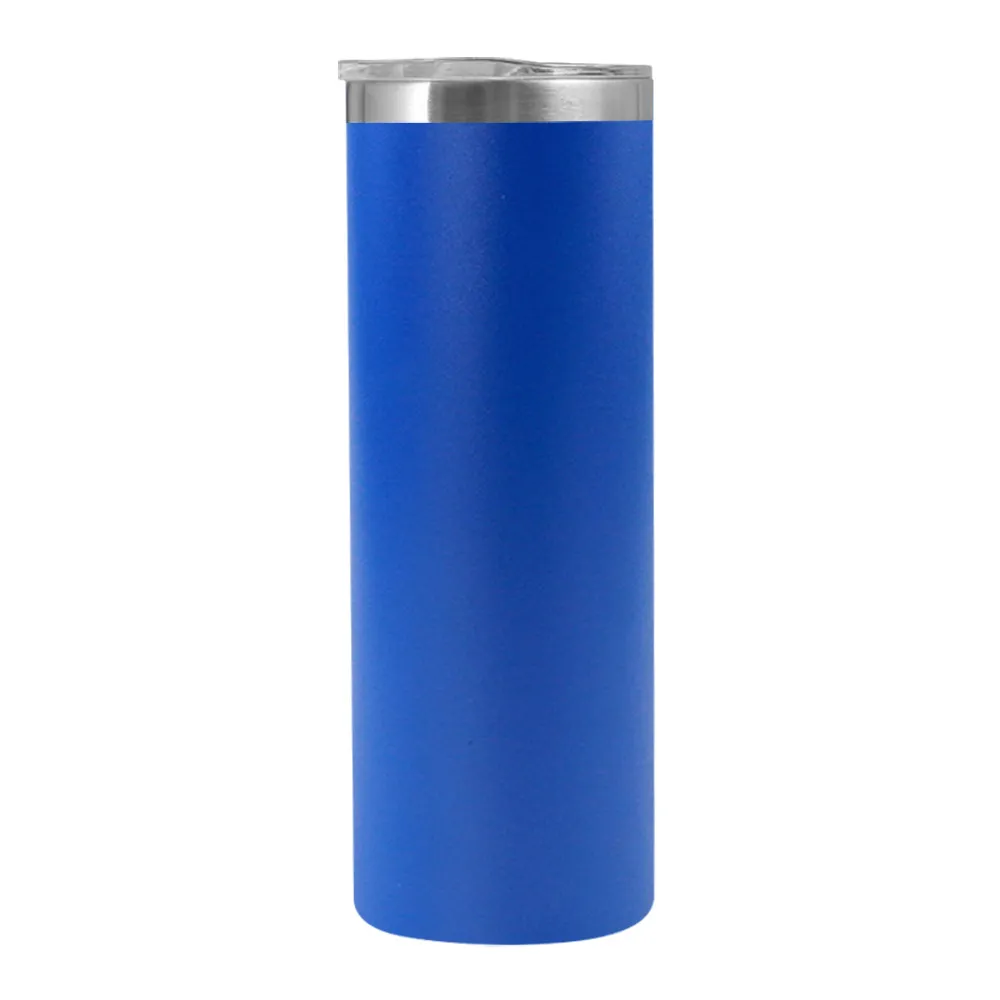
The custom 20oz stainless steel skinny tumbler and custom ceramic mug pages show current specifications for both routes.
The fastest way to choose between a custom tumbler and a ceramic mug is to imagine the moment of use. If the recipient is walking to the car, commuting by train, carrying water to a gym, attending an outdoor event, or moving between job sites, a tumbler makes sense. If the recipient is sitting at a desk, drinking coffee at home, using a mug in a break room, or opening a retail gift box, a ceramic mug may be the better object.
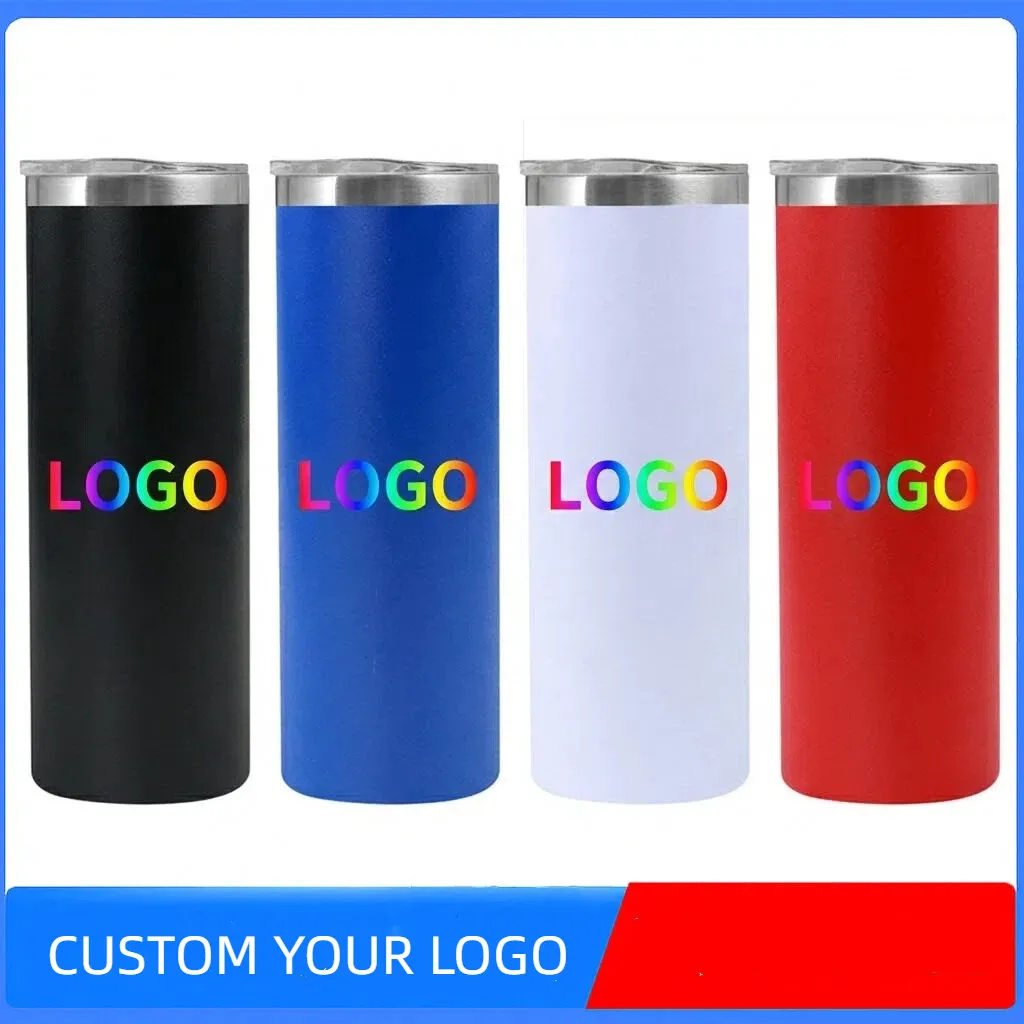
This matters because drinkware is not only a logo surface. It is a daily object. A product that fits the recipient's routine stays visible. A product that does not fit the routine becomes storage clutter. A beautiful ceramic mug is not useful in a car cup holder. A premium travel tumbler may feel excessive for a simple office coffee set. The buyer should choose the product that solves the real use case first, then choose decoration and packaging.
For corporate gifts, ask how the recipient will actually use the item. Employees who commute may appreciate an insulated tumbler. Office teams may prefer ceramic mugs that stay at work. Sales teams traveling between client visits may need tumblers. Clients receiving a holiday desk gift may respond better to a ceramic mug with coffee, tea, or snacks in a gift box.
For retail, ask where the product will sit on the shelf and how it will be photographed. Ceramic mugs often photograph well because they have a clear front face and a familiar shape. Tumblers can look modern and practical, but they need good lid, finish, and packaging choices to justify a higher retail price.
| Buyer scenario | Better choice | Why |
|---|---|---|
| Office employee gift | Ceramic mug | Desk-friendly, familiar, lower unit cost |
| Commuter employee gift | Tumbler | Travel use and temperature retention |
| Outdoor event giveaway | Tumbler | Durable and practical away from desks |
| Cafe merchandise | Ceramic mug | Fits coffee culture and shelf display |
| Fitness or sports brand | Tumbler | Hydration and mobility match the audience |
| Holiday gift box | Ceramic mug or both | Mug pairs well with coffee, cocoa, and snacks |
| Premium client gift | Tumbler | Higher perceived utility if quality is strong |
| Budget promotional order | Ceramic mug | Lower unit cost if breakage packing is controlled |
| Retail travel line | Tumbler | Higher practical value and modern positioning |
This table is not absolute. A premium ceramic mug can be a strong retail product, and a low-cost tumbler can be a good event item. The point is to avoid choosing only by unit price. Match use, price, packaging, and audience.
Tumbler caveats: higher unit cost, heavier freight, and the print area is curved and smaller than a mug face. Laser engraving or screen printing suits simple logos on stainless.
Tumblers are also better when durability is part of the brand promise. Stainless steel can survive daily movement better than ceramic. A tumbler can be used in a car, on a walk, at a field event, or at a worksite. If the audience is active, mobile, or outdoors, a tumbler has a stronger chance of being used regularly.
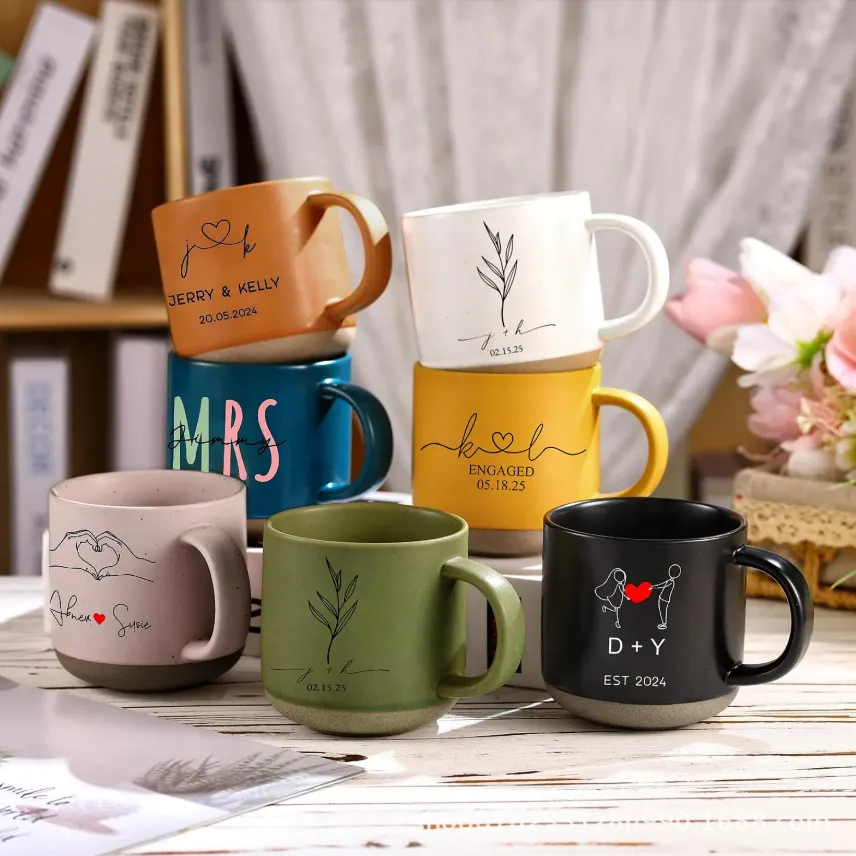
The lid is central to the tumbler experience. A tumbler with a weak lid, awkward drinking opening, or poor seal feels cheap quickly. If the buyer is positioning the product as premium, the lid, gasket, straw, coating, and hand feel must match the price point. A low-quality lid can ruin an otherwise good stainless body.
Tumblers can also carry stronger utility claims, such as keeping drinks hot or cold. Those claims should be supported by the product construction and sample testing. A single-wall stainless cup may look like a tumbler but does not perform like a double-wall vacuum tumbler. Buyers should confirm construction before using temperature-retention language.
Ceramic caveats: fragile in transit (individual protection required), heavy to ship, and no insulation. A mug is a desk object, not a travel product.
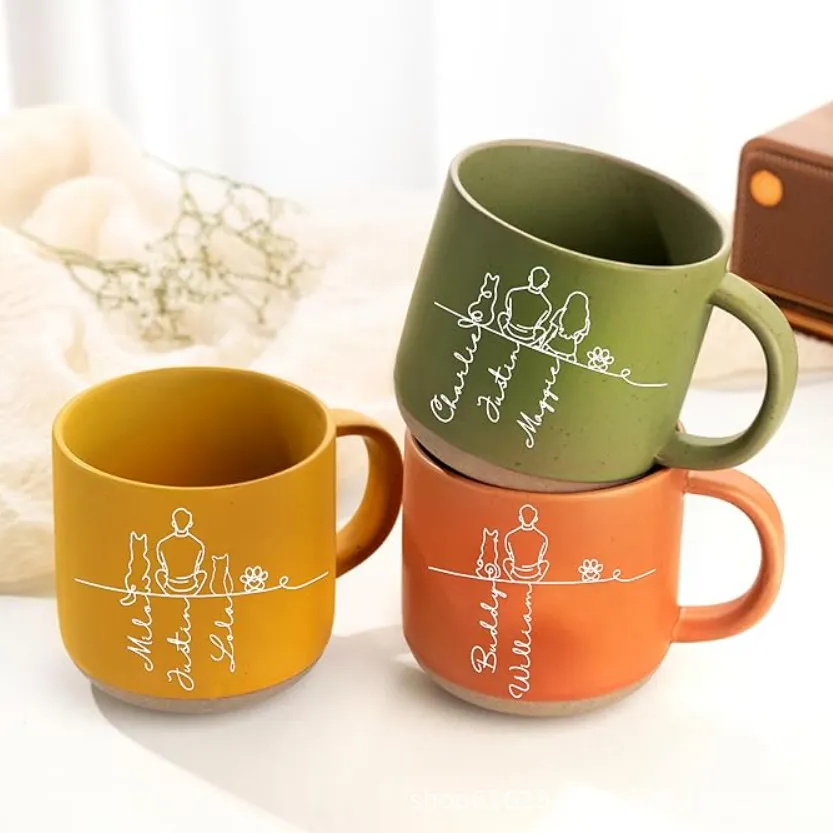
Ceramic mugs are strong when emotional warmth, desk presence, and artwork area matter. They feel familiar. They work well with coffee, tea, hot chocolate, office kitchens, cafes, hospitality rooms, and home gift sets. The handle and front face create a clear decoration area, which is helpful for full-color logos, illustrations, slogans, or retail designs.
Mugs also work well in bundled products. A ceramic mug can be packed with coffee beans, tea, cocoa mix, cookies, notebooks, candles, or holiday items. For a corporate holiday gift or retail shelf set, the mug can anchor the pack visually. A tumbler can also be boxed, but ceramic mugs often feel more natural in cozy gift themes.
The main weakness is breakage. Ceramic must be packed properly, and the buyer should factor protective packing into landed cost. A low-cost mug without proper box, divider, or carton protection can become expensive if breakage rates rise. For e-commerce, the mug may need packaging that survives parcel delivery, not only pallet shipment.
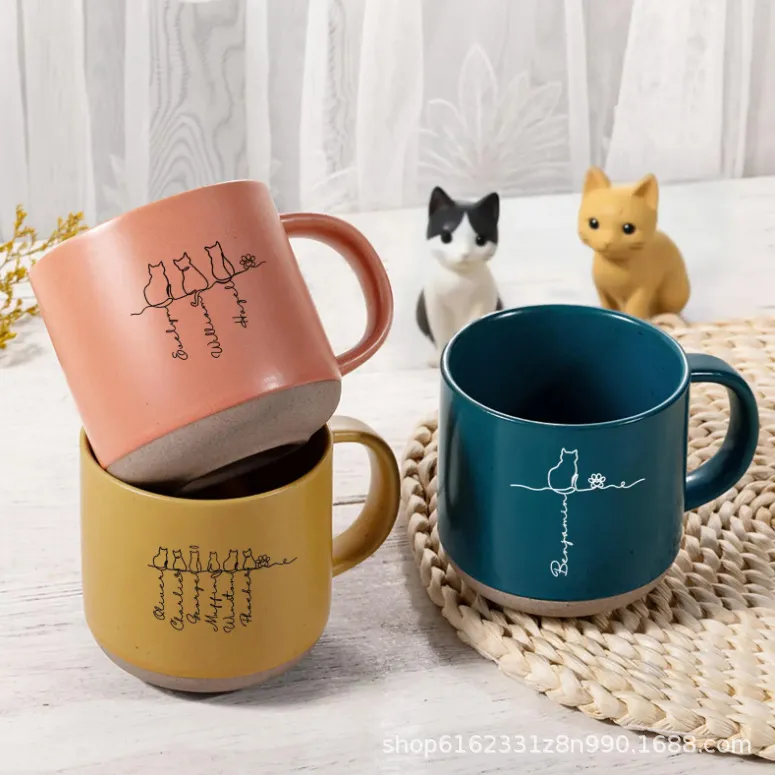
Tumblers and mugs have different cost drivers. A tumbler price depends heavily on stainless steel grade, wall construction, vacuum insulation, coating, lid, print method, and packing. A ceramic mug price depends on clay body, glaze, shape, firing, print method, decal, decoration, and protective packing.
| Cost factor | Tumbler impact | Ceramic mug impact |
|---|---|---|
| Material | Stainless grade and thickness affect cost | Ceramic body and glaze affect cost |
| Construction | Vacuum insulation is a major cost driver | Shape and firing complexity affect cost |
| Decoration | Curved surface limits detail and affects setup | Larger flat-ish face supports more artwork |
| Lid/accessory | Lid, straw, gasket, brush can add cost | Usually no lid unless gift set or specialty |
| Packing | Gift box, straw pack, scratch protection | Breakage protection is essential |
| Freight | Heavy and carton-volume sensitive | Heavy plus fragile-protection volume |
The cheapest quote is not always the better option. A low tumbler quote may be single-wall instead of vacuum-insulated, or may use a weaker lid. A low mug quote may use cheaper glaze, lighter body, or minimal packing. Compare full configuration and landed cost.
Decoration should match the object. Tumblers have a curved surface, so logo size, placement, and wrap design need careful proofing. Laser engraving is durable and works well for simple logos on stainless or coated surfaces. Screen printing works for simple logos on coated tumblers. Full-wrap transfer can handle more color, but it needs careful sample approval.
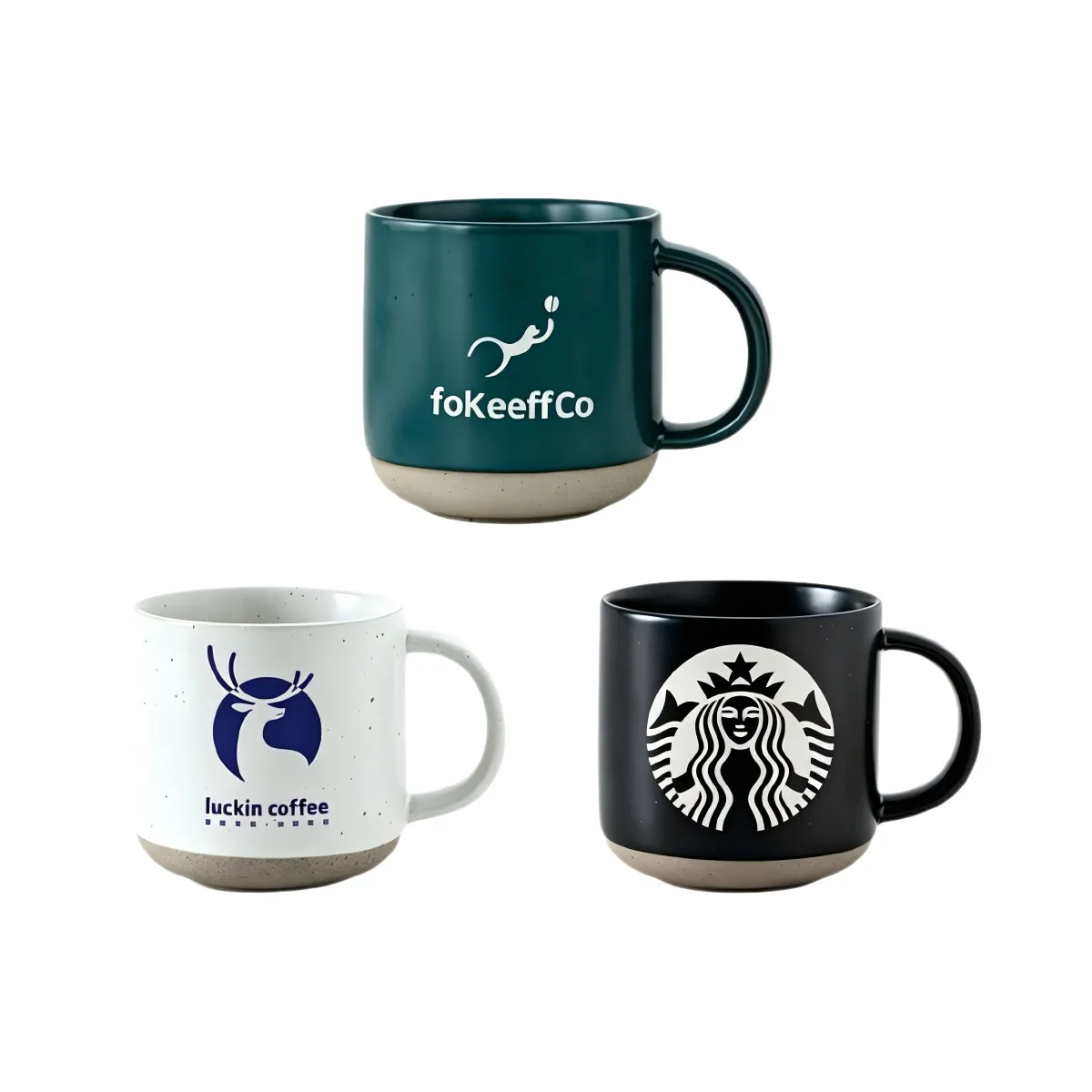
Ceramic mugs usually offer a larger and more readable brand area. Screen printing, decals, transfer printing, and full-color artwork can work well. A mug can show illustration, slogans, event artwork, or retail graphics more clearly than a narrow tumbler surface. If artwork detail matters more than mobility, the mug may be the better choice.
Handle orientation matters for mugs. Decide whether the logo should face outward when held in the right hand, left hand, or both sides. For corporate gifts and retail, double-sided print may be useful. For tumblers, decide whether the logo faces front, wraps around, or repeats.
Color matching also differs. Powder coating on tumblers, glaze on mugs, and print inks on each surface all behave differently. Approve physical samples if brand color is important. Screen colors and digital mockups are not enough.
Packaging often decides whether the drinkware feels like a giveaway or a gift. A tumbler in a plain bulk carton is practical for internal distribution, but a client gift may need a white box, printed box, sleeve, insert card, or accessory pack. A ceramic mug may need protective box, retail gift box, or molded insert.
For corporate gifts, the packaging should match the audience. Employees may be fine with simple individual boxes. VIP clients may expect stronger presentation. Retail buyers may need barcode labels, shelf-ready cartons, product copy, and packaging that protects the item during handling.
If the drinkware is part of a set, confirm the pack-out early. A mug with coffee and cookies, or a tumbler with straw and brush, is a more complex order than a single item. Each accessory adds cost, packing labor, carton volume, and QC points.
Both tumblers and mugs are heavier than many promotional products, but ceramic adds fragility. A tumbler shipment is usually concerned with scratches, coating chips, denting, lid damage, and carton compression. A mug shipment is concerned with breakage, glaze chips, handle damage, and box crush.
For bulk orders, sea freight is often economical if the schedule allows. For samples and urgent replenishment, express or air can work. The buyer should confirm carton dimensions, gross weight, pieces per carton, and packing method before comparing landed cost. Drinkware freight can change quickly when gift boxes or protective inserts are added.
For mugs, individual protection is not optional if the order must arrive in sellable condition. Ask about inner boxes, dividers, cushioning, carton strength, and drop protection. For tumblers, ask about scratch protection, lid separation, and whether accessories are packed in a way that avoids rubbing.
Drinkware touches food or drink, so compliance questions apply to both products. For ceramic mugs, buyers should ask about glaze, lead and cadmium migration documentation, decoration placement, and whether the mug is intended for food-contact use. For stainless tumblers, buyers should ask about steel grade, lid material, gasket, straw, coating, and food-contact documentation for the destination market.
Do not repeat vague compliance claims without documents. If the buyer plans to sell in the US, EU, UK, or another regulated market, the RFQ should state the destination market and document requirements. For large retail programs, independent testing on a production sample may be appropriate.
Microwave and dishwasher claims also differ. Ceramic mugs may be microwave-safe unless metallic decoration or certain finishes prevent it, but the claim should be supported. Stainless tumblers are not microwave-safe. Dishwasher suitability depends on coating, print, lid, and product construction. If the buyer wants to market these features, confirm support in writing.
Many brands run both: a tumbler for commuter and outdoor programs, a ceramic mug for office and retail programs. If the budget is one option, the use case decides; if the budget allows both, they cover different recipients with one brand look.
A two-product strategy works especially well for brands with more than one audience. The same logo can appear on a desk mug for office employees and a travel tumbler for field teams. A retail brand can sell a ceramic mug for home coffee and a tumbler for travel. A conference can use tumblers for VIP gifts and mugs for sponsor gift boxes.
The two products should not be forced into identical design. The brand can stay consistent while adapting artwork to each object. A mug may carry a full-color illustration, while the tumbler uses a simplified engraved mark. A mug may use cozy packaging, while the tumbler uses a modern box. Consistency should come from color, logo, and message, not from copying the same layout onto different shapes.
Use this decision path before requesting quotes:
This framework helps buyers avoid generic comparisons. The right answer depends on how the product will be used and sold.
MOQ and lead time differ per product and configuration; confirm them for each in the RFQ. Sampling matters for both - check print position and color on the sample, and for tumblers check insulation and lid seal. For mugs, approve the glaze and print on a physical sample.
MOQ for tumblers can vary by construction, coating, lid, print method, and packaging. A standard stainless tumbler may have a different MOQ from a custom color or full-wrap printed tumbler. MOQ for mugs can vary by shape, glaze, print method, and box type. Ask for MOQ by exact configuration, not by category.
Sample approval should test the real selling promise. For tumblers, check lid fit, leak behavior, coating, print or engraving, capacity, and basic insulation. For mugs, check glaze, print, handle comfort, capacity, rim smoothness, and packing. If compliance documents are required, review them during sample approval, not after production.
Lead time should include artwork, proofing, sampling, production, packing, inspection, and freight. Seasonal gift programs should start earlier because drinkware is heavy and packaging takes time.
Both are heavy for their size; freight is weight-driven and sea freight is the normal route at quantity. Mugs add protection cost and breakage risk in transit. Confirm FOB or CIF terms in the RFQ. See how to order for delivery options.
A landed-cost comparison should include product cost, decoration, packaging, carton volume, freight, duty, breakage allowance, and inspection. A mug may have a lower factory unit price but higher breakage protection. A tumbler may have a higher factory price but lower breakage risk. The best option is the one with the stronger margin after real use and shipping are considered.
If the order is for e-commerce, parcel shipping after import matters too. Ceramic mugs need protective packaging for individual shipment. Tumblers may need scratch protection and lid security. If the item will be fulfilled by a warehouse or marketplace, packaging dimensions and barcode labels should be confirmed early.
A clear drinkware comparison RFQ might read:
We are choosing between a 20 oz stainless steel vacuum tumbler and an 11 oz ceramic mug for a corporate gift program. Please quote both options at 1,000, 2,500, and 5,000 pieces. Include material, construction, decoration method, sample cost, production time, packing option, carton dimensions, food-contact documents available for the US market, and sea/air shipping estimates to our warehouse.
For a retail program, add packaging:
Please quote retail-ready packaging with barcode label, individual box, and carton labels by SKU. For the tumbler, include lid and straw details. For the mug, include breakage protection and gift box options.
This format makes comparison easier because the supplier knows both products are being evaluated against the same use case.
Before choosing, ask:
When contacting us, include:
Best for buyers reviewing product comparison guide, related SKU images, RFQ details, MOQ, sampling, packaging, QC, and shipment planning from China.
It depends on the recipient and use: tumblers suit commuters and outdoor programs, mugs suit desks and retail. The best answer is often both, with the use case deciding the mix.
Tumblers add vacuum insulation construction, stainless material, and heavier freight. Mugs are simpler to produce and lighter on cost, but they do not insulate and break more easily.
Yes, with full-wrap transfer printing, but the curved surface limits detail compared to a mug face. Simple logos with laser engraving or screen printing are the most cost-effective on tumblers.
Send your artwork, target quantity, packing needs, destination country, and deadline to quote custom tumbler vs ceramic mug with clear factory assumptions.
Data verified as of 2026-08-04. MOQ, lead time, packaging, and compliance scope should be confirmed against the actual order before purchase order approval.
Decision closure
Use the next step that matches your buying stage.
Go to product category hubs to compare product families before choosing a sourcing route.
Go to custom products for startups under 500 units to check low-MOQ order logic before asking for bulk pricing.
Go to the custom product brief form to send artwork, quantity, packaging, and destination details for review.