If you are trying to avoid marketplace listing noise
Go to factory-direct custom products without marketplace sourcing to build a normalized RFQ before comparing supplier quotes.
A custom water bottle order should be decided in this order: use case, capacity, material, insulation, lid, finish, logo method, and packing. Capacity follows the user: 350-400 ml for desk and coffee-style use, 500 ml for corporate gifts and gyms, 750 ml for sports, and 1 L for outdoor or job-site programs. Material is usually 304 stainless steel for mainstream drinkware, with 316 stainless steel, borosilicate glass, or plastic used only when the use case justifies it. Double-wall vacuum insulation is the main cost driver and the feature buyers expect when the bottle is sold as premium drinkware. When comparing a custom water bottle supplier in China, make sure every quote uses the same capacity, lid, coating, print method, packing, and compliance assumptions.
A good RFQ removes guesswork from the supplier side. Confirm these points before asking for a price:
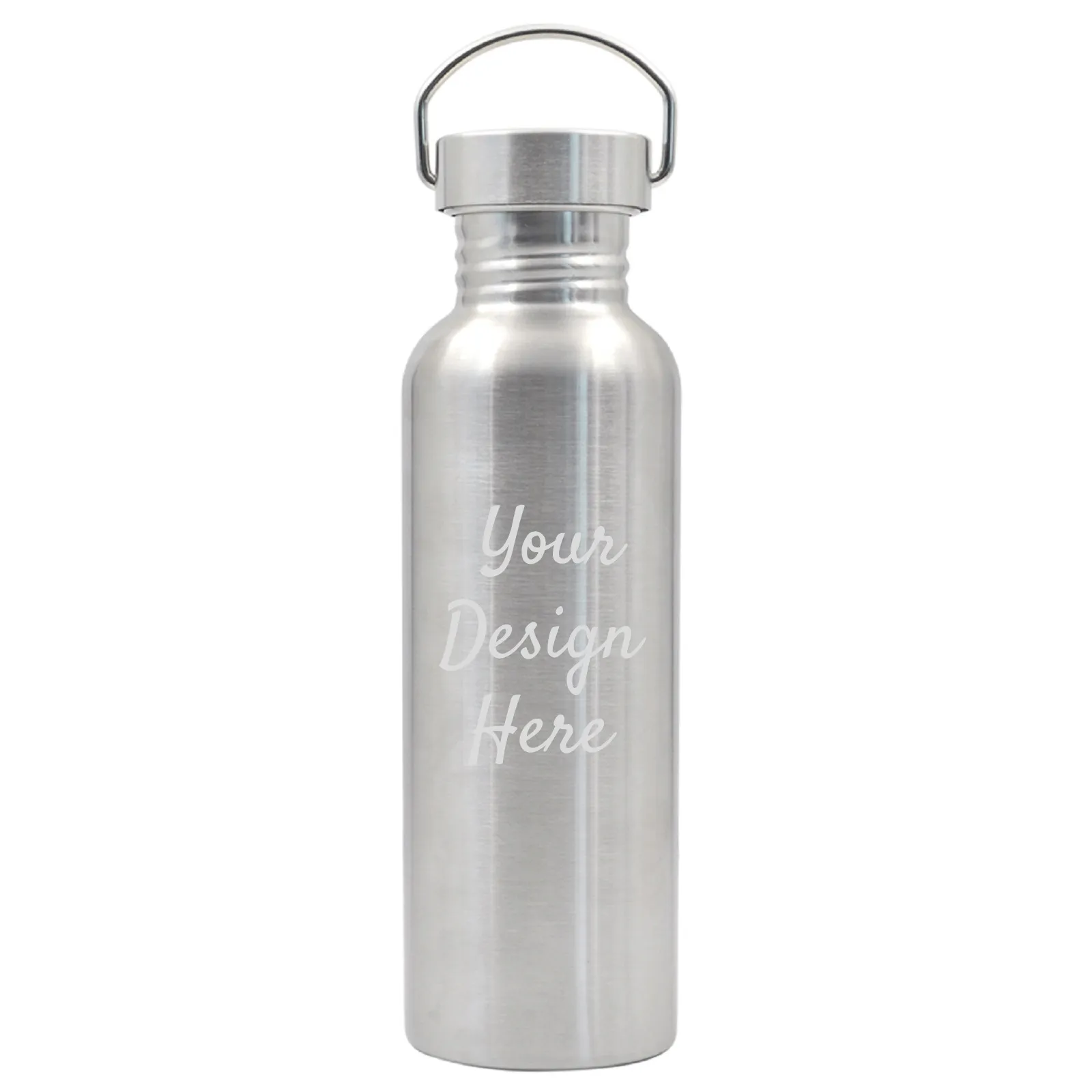
The custom 304 stainless steel water bottle page is the correct product path for a standard stainless bottle quote.
| Capacity | Best use | Buying note |
|---|---|---|
| 350-400 ml | Office desks, meetings, coffee-style bottles | Compact, easy to pack, limited all-day use |
| 500 ml | Corporate gifts, gyms, schools, commuting | The safest default for promotional drinkware |
| 750 ml | Sports, outdoor, travel, wellness brands | Better hydration capacity without becoming too bulky |
| 1 L | Hiking, training, job sites, outdoor programs | Strong utility, but heavier and larger to ship |
Do not choose capacity from price alone. A smaller bottle can look cheaper, but it may fail the use case. A larger bottle can feel more valuable, but it increases carton size, freight cost, and user carry weight.
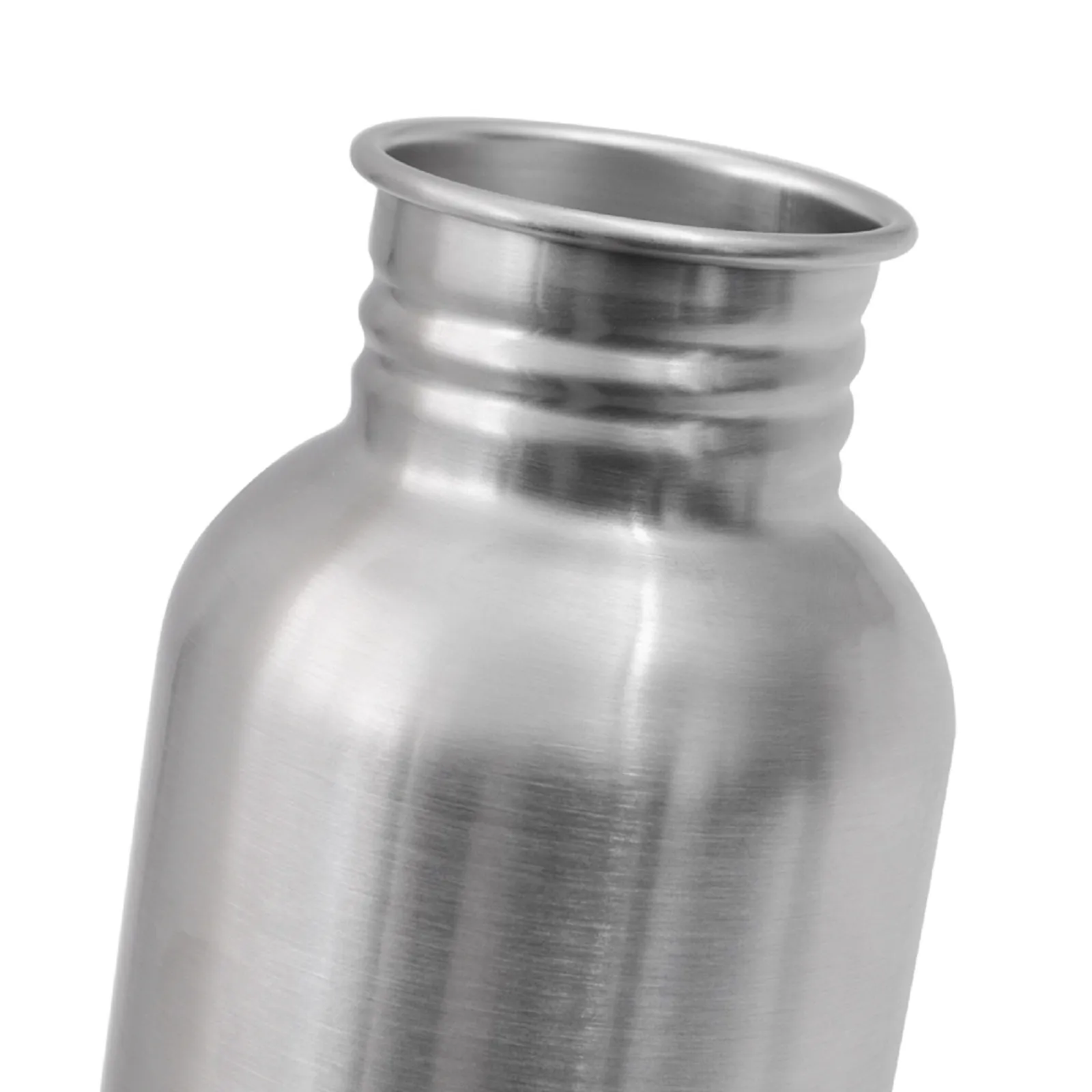
304 stainless steel is the default material for most custom water bottles. It is durable, corrosion-resistant for normal drinkware use, and widely accepted for food-contact applications. If the bottle is a corporate gift, fitness product, or retail item, 304 stainless is usually the baseline spec.
316 stainless steel adds corrosion resistance and costs more. It is rarely required for ordinary water bottles, but it may be discussed for premium programs or specific use cases. Do not pay for 316 unless the product positioning or buyer requirement actually needs it.
Glass bottles feel clean and premium and are popular for tea, coffee, wellness, and home-office use. The tradeoff is breakage risk, higher packing requirements, and heavier freight. Glass should be sampled and drop-risk reviewed before a bulk order.
Plastic bottles are light and cost-effective, but compliance and perception vary by market. If choosing Tritan, PP, or another plastic, confirm food-contact documentation, odor control, print durability, and whether the product positioning supports plastic.
Single-wall bottles are cheaper and lighter, but they do not keep drinks cold or hot. Double-wall bottles add a layer of protection and feel more premium. Double-wall vacuum bottles are the main insulated option and can keep drinks cold for 12-24 hours depending on construction, lid design, and testing conditions.
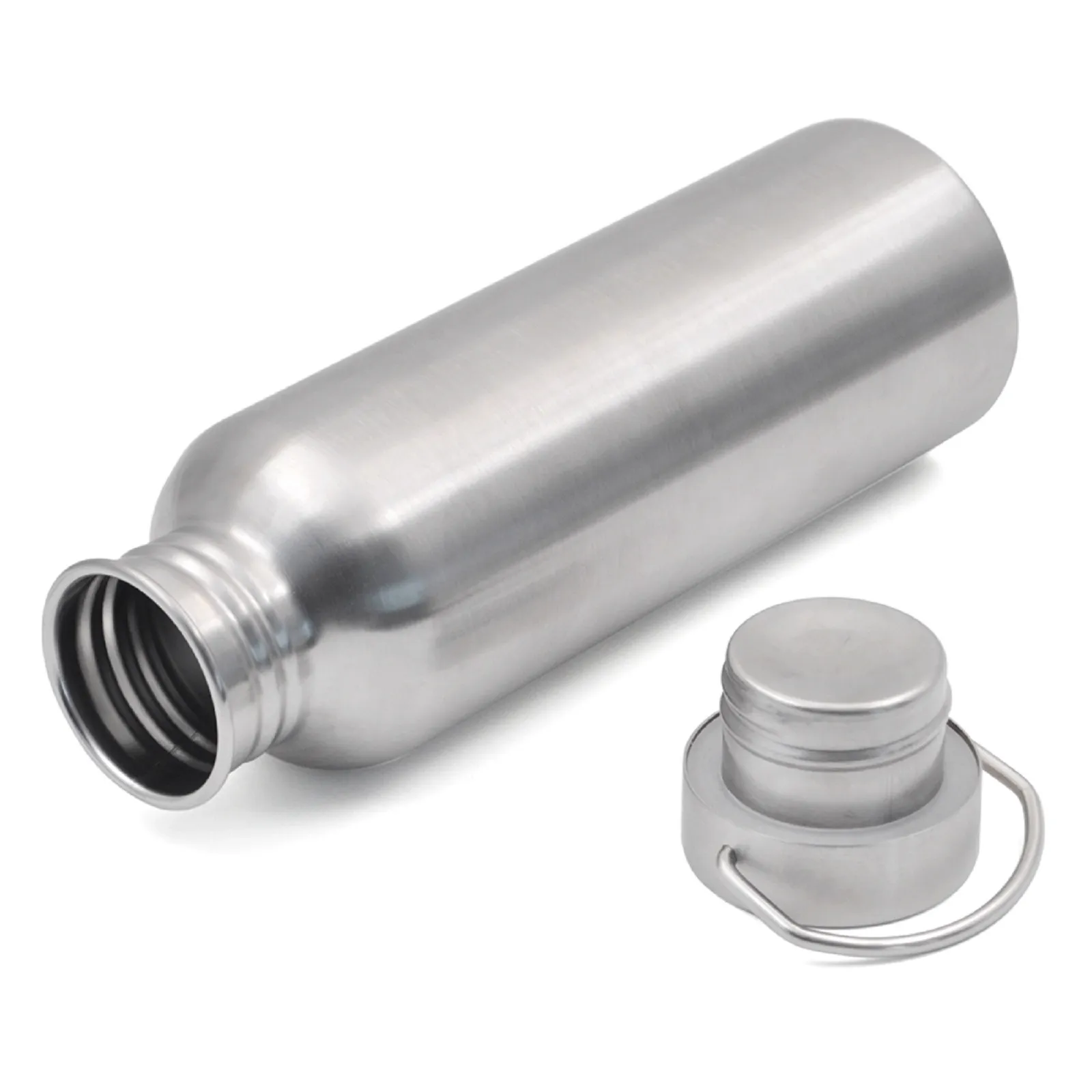
Vacuum insulation is often the largest price difference between two similar-looking bottles. If one supplier quote is much cheaper, check whether it is quoting a single-wall bottle while another is quoting a true vacuum insulated bottle.
| Lid type | Best use | QC focus |
|---|---|---|
| Screw cap | Office, travel, simple gifts | Seal quality and thread fit |
| Flip top | Gym, school, commuting | Hinge strength and leak resistance |
| Straw lid | Sports and casual daily use | Straw fit, gasket, cleaning access |
| Chug lid | Outdoor and fitness | Flow rate and closure strength |
| Handle lid | Travel and retail bottles | Handle strength and attachment points |
The lid is not a small accessory. Most user complaints on water bottles come from leaks, weak hinges, poor gaskets, or lids that are hard to clean.
Custom water bottles are not just printed blanks. Capacity, lid tooling, coating, print method, and packing all affect MOQ. A standard 304 stainless steel bottle with a common lid and simple logo has the most flexible minimum; custom colors, special lids, retail boxes, and full-wrap artwork raise the minimum.
Sampling is essential. Approve a physical bottle and test capacity, leak resistance, insulation performance, coating durability, print placement, and packing. A polished photo can hide a weak lid or thin coating. Lead time includes bottle production, coating, printing, packing, and freight, so start from the required arrival date and work backward.
Water bottles are weight-driven compared with flat promotional goods. Express shipping is practical for samples and urgent small orders, but bulk orders usually move by sea freight. Individual gift boxes and protective inserts improve presentation but increase carton volume. Ask for carton dimensions, gross weight, pieces per carton, and delivery terms such as FOB, CIF, or DDP. See how to order for delivery options.
When contacting us, include:
A custom water bottle is not chosen only by capacity or price. The right specification depends on how the bottle will be used, who receives it, and what the buyer wants the product to communicate. A bottle for a gym campaign, a corporate onboarding kit, a retail wellness brand, and a hotel gift program can all look similar in a catalog, but they need different decisions.
For a corporate gift, the safest route is usually a 500 ml or 750 ml 304 stainless steel vacuum bottle with a clean coating, reliable lid, and laser-engraved or simple printed logo. The buyer wants a product that feels useful, not risky. Leak control, gift box presentation, and consistent logo placement matter more than unusual shape.
For a fitness or sports program, capacity and lid function become more important. A 750 ml bottle or 1 L bottle with a handle lid, straw lid, or chug lid may be more practical than a small desk bottle. The buyer should test flow rate, grip, gasket seal, and whether the bottle fits a gym bag or car holder. A bottle that looks premium but is hard to drink from will not be used.
For a retail or private label bottle, the specification must support a SKU. That means repeatable color, reliable packaging, barcode placement, clear material claims, and consistent production across reorders. Retail buyers should sample the full product, including box, insert, label, and carton marking, not only the bottle body.
For a hotel, resort, or travel program, presentation and durability matter. The bottle may be part of an amenity kit or room gift. A brushed stainless finish, bamboo-style lid, or matte coating can create a stronger feel, but the supplier must still confirm food-contact materials and leak performance.
For a low-cost event giveaway, a single-wall stainless bottle or plastic bottle may be enough. In this case, the buyer should not overpay for vacuum insulation if recipients will use the bottle only casually. The practical focus is clean printing, safe material, and on-time delivery.
Two water bottle quotes can look similar at first and still represent very different products. A buyer should compare the cost blocks instead of comparing only the unit price.
| Cost block | What affects it | Buying note |
|---|---|---|
| Body material | 304 stainless, 316 stainless, glass, plastic | 304 is the mainstream baseline for stainless drinkware |
| Capacity and shape | 350 ml, 500 ml, 750 ml, 1 L, slim, wide mouth | Larger bodies raise material, packing, and freight cost |
| Insulation | Single wall, double wall, vacuum insulation | Vacuum insulation is usually the biggest cost driver |
| Lid system | Screw cap, flip top, straw lid, handle lid | More parts create more QC points and higher cost |
| Coating | Powder coat, paint, brushed steel, custom color | Coating affects both look and durability |
| Logo method | Laser engraving, screen print, pad print, wrap print | Artwork complexity changes setup and sample review |
| Packing | Bulk, white box, gift box, color box | Retail packing can change landed cost significantly |
| Documentation | Material statements, test reports, compliance files | Confirm what is included before quoting resale programs |
If a quote is much cheaper than the others, check the assumptions. It may be single-wall instead of vacuum insulated. It may use a lower-cost lid. It may exclude individual boxes. It may quote a thinner body or a simpler coating. These differences are not always visible in a catalog photo, but they change user experience and return risk.
Ask for price breaks at several quantities. A private label buyer should usually compare the MOQ, a practical first order, and a reorder quantity. For example, ask for 500, 1,000, and 3,000 pieces using the same specification. This helps the buyer see whether the first order should be a small test or a more efficient production run.
Capacity is a user decision, but it is also a shipping decision. A 1 L bottle may look like better value, yet the larger body increases carton size and weight. A 350 ml bottle may be cheaper to pack and ship, but it can feel too small for fitness or outdoor use.
For bulk corporate gifts, 500 ml is often the safest capacity because it balances size, usefulness, and freight. It fits many desks, bags, and car cup holders. It is also easier to pack in gift boxes without creating oversized cartons.
For sports and outdoor programs, 750 ml or 1 L can make sense. The buyer should check whether the bottle diameter fits common cup holders, bike cages, backpack side pockets, or gym equipment if those uses matter. A bottle that is too wide may look premium but frustrate daily users.
For coffee-style or office bottles, 350-400 ml can be strong. These sizes feel compact and giftable. They are less useful for all-day hydration, but they work for meetings, desk use, and hospitality programs.
When asking for freight, request carton dimensions, gross weight, net weight, and pieces per carton. Water bottles are heavier than flat promotional products, and individual boxes increase volume. The freight method should be chosen after the packed size is confirmed, not from the bottle photo alone.
The lid is often the most important quality point on a water bottle. Many customer complaints are not about the steel body; they are about leaks, weak hinges, loose straws, poor gaskets, or lids that are hard to clean.
A screw cap is simple and reliable when the thread is clean and the gasket is seated correctly. It is a good choice for corporate gifts and travel bottles. A flip top is convenient for commuting and gym use, but the hinge and locking mechanism should be tested. A straw lid is popular for sports and casual daily use, but it has more parts and needs stronger cleaning review. A handle lid is useful for outdoor programs, but the handle strength and attachment point should be checked.
Ask what the gasket is made from and whether it is food-grade silicone. Check whether spare gaskets or replacement lids are available for future orders. If the bottle is a retail SKU, replacement-part consistency matters because customers may reorder lids or expect the same lid across batches.
A basic lid test should include filling the bottle, closing it, shaking it, inverting it, and leaving it on its side. Test with both room-temperature water and warm water if the product will be marketed for hot drinks. A lid that passes a quick upright photo check can still fail in a bag.
The finish changes both the look and the complaint risk. Powder coating gives a premium matte feel and strong color options, but it must be checked for chips, scratches, orange peel texture, and color consistency. Painted finishes can look good at lower cost, but abrasion resistance may be weaker. Brushed stainless avoids coating chips but limits color options.
Logo method should match the finish. Laser engraving is durable and premium on stainless steel, especially when the logo is simple. Screen printing works for simple colored marks on coated bottles, but adhesion and wear need testing. Pad printing can handle smaller curved areas. Full-wrap transfer or digital printing is useful for colorful retail designs, but the buyer must review seam alignment, surface feel, and resistance to rubbing.
For a corporate gift, a small laser-engraved logo often feels more premium than a large cheap print. For retail, full-color designs may be necessary to create shelf appeal. For event giveaways, a simpler one-color logo can reduce cost and production risk.
Ask the supplier to confirm the print size, placement, and tolerance. A logo centered in a mockup can drift during production if the fixture or bottle curve is not controlled. The approved sample should become the standard for bulk production.
Water bottles touch food and drink, so material claims need more care than ordinary promotional products. A buyer should ask what documentation the supplier can provide for the body, lid, gasket, coating, and decoration. The required paperwork depends on the destination market and the product use.
For stainless steel bottles, ask for the material grade and any available food-contact documentation. 304 stainless steel is the standard baseline, but the claim should be tied to the actual product where possible. For plastic lids and straws, ask about material type and food-contact suitability. For silicone gaskets, ask whether the supplier can document food-grade silicone.
For coated or printed bottles, confirm whether decoration is outside the food-contact area and whether inks or coatings are cured correctly. A logo on the outside of a bottle is usually lower risk than material touching the drink, but buyers should still avoid unsupported claims.
Avoid vague marketing statements such as "FDA approved bottle" unless the supplier provides documents that support the exact wording. It is safer to say what the product is made from and what documents are available. For resale programs, high-volume campaigns, or regulated markets, independent testing on a production sample may be worth the cost.
A water bottle sample should be tested in use, not only photographed. The buyer should create a written checklist and approve the sample against it.
If the order uses multiple colors or lids, sample each key variation. A black powder-coated bottle and a white powder-coated bottle may show coating defects differently. A straw lid and screw cap have different risk points.
When comparing suppliers, make sure each quote describes the same bottle. A supplier quoting a single-wall bottle will be much cheaper than one quoting double-wall vacuum insulation. A bottle with a simple screw cap is not the same as a bottle with a straw lid, carry handle, and retail box.
Ask each supplier to confirm:
A professional supplier should answer these details clearly. If the answer is only "same as picture" or "standard quality," the quote is not strong enough for a reliable custom order. Photos are useful, but the written specification controls production.
A practical RFQ for a custom water bottle might look like this:
Product: custom 304 stainless steel water bottle. Capacity: 500 ml. Construction: double-wall vacuum insulated. Lid: screw cap with food-grade silicone gasket. Finish: matte black powder coat. Logo: laser engraving, 45 mm wide, centered on front, vector PDF attached. Quantity: 1,000 pcs, all black. Packing: individual white box, 24 pcs per carton if possible. Destination: USA. Target arrival date: October 10. Please quote MOQ, sample cost, sample lead time, production time, carton dimensions, gross weight, available food-contact documents, and sea freight option.
This gives the supplier enough information to quote the same product across cost, sample, production, and freight. If the buyer only asks for "custom water bottle price," each supplier will make different assumptions, and the prices will not be comparable.
Best for buyers reviewing specification decision guide, related SKU images, RFQ details, MOQ, sampling, packaging, QC, and shipment planning from China.
MOQ depends on the exact configuration. A standard 304 stainless steel bottle with a common lid and simple logo has the lowest minimum, while custom lids, custom colors, full-wrap printing, and retail boxes raise the MOQ.
Yes. 304 stainless steel is the standard food-contact grade for most stainless drinkware. Confirm the specific material statement and destination-market documentation with the supplier.
Usually no. 316 stainless steel costs more and is rarely necessary for ordinary water bottles. Consider it only if the product positioning or technical requirement justifies the premium.
Send your artwork, target quantity, packing needs, destination country, and deadline to quote custom water bottle supplier China with clear factory assumptions.
Data verified as of 2026-08-04. MOQ, lead time, packaging, and compliance scope should be confirmed against the actual order before purchase order approval.
Decision closure
Use the next step that matches your buying stage.
Go to factory-direct custom products without marketplace sourcing to build a normalized RFQ before comparing supplier quotes.
Go to direct factory communication for custom product orders to turn supplier messages into a controlled production record.
Go to the custom product brief form to send artwork, quantity, packaging, and destination details for review.