If you are trying to avoid marketplace listing noise
Go to factory-direct custom products without marketplace sourcing to build a normalized RFQ before comparing supplier quotes.
A custom product order from China follows the same six steps for almost any product: RFQ, sample approval, production, quality control, packing, and shipping. The process is not mysterious, but it is sequential - production cannot start before the sample is approved, and shipping cannot be quoted without the packed carton size. This guide walks through each step with the questions buyers ask at every stage, using a custom golf towel order as the example.
The order starts with a specification, not a price. Send product type, quantity, size, material, logo file, print method, packing, destination country, and target delivery date. The supplier reviews the spec and confirms MOQ, sample options, production time, and shipping assumptions. The clearer the RFQ, the faster and more accurate the quote.
Before bulk production, approve a physical sample. Check size, color, print, material, and packing against the spec. This is the cheapest moment to fix a problem - a sample issue costs one sample; a bulk issue costs the whole batch. Most product problems found at this step take days to fix; the same problems found at inspection take weeks.
After sample approval, bulk production runs to the approved spec. The supplier schedules the order around the confirmed quantity, material availability, and delivery date. Buyers should receive a production timeline with key milestones: material confirmed, production started, production complete.
Inspection checks the batch against the approved sample and the acceptance standard: size, color, print, construction, and packing count. The inspection can be done by the supplier's QC or an independent pre-shipment inspection, depending on the order value and the buyer's program. The result is an inspection report that documents what was checked.
The goods are packed to the agreed requirement: bulk, poly bags, header cards, or custom boxes, then into cartons with correct markings. The packed carton size determines freight cost - confirm it before shipping.
The shipment moves by express, air, or sea depending on volume and deadline, under the agreed Incoterm (FOB, CIF, or DDP). The buyer receives the shipping documents and tracks the cargo to arrival. See how to order for the delivery process in detail.
The custom product process is sequential. One late approval can delay everything after it. A practical order timeline looks like this:
| Stage | Buyer action | Supplier output |
|---|---|---|
| Product idea | Define use case, budget, quantity, and deadline | Suggest product route |
| RFQ | Send spec, artwork, packing, and destination | Quote MOQ, price, sample, and lead time |
| Proof | Review layout and technical details | Digital proof or sample plan |
| Sample | Approve physical sample or request revision | Final sample and updated spec |
| Order | Confirm PO, deposit, and final files | Production schedule |
| Production | Monitor milestones | Material, production, and packing updates |
| QC | Review inspection result | Inspection report and correction plan if needed |
| Packing | Confirm carton data | Packing list and carton marks |
| Shipping | Approve freight plan and documents | Tracking and shipping documents |
| Arrival | Check received goods | Receiving record and reorder notes |
This table helps first-time buyers understand why custom production takes longer than buying stock goods. The supplier is not simply picking an item from a shelf. The supplier is turning artwork, material choices, packaging, quantity, and delivery requirements into a controlled production run.
Before contacting suppliers, collect the materials that prevent back-and-forth:
If the buyer does not know every detail, say so clearly. A good supplier can recommend standard options. But the buyer should separate fixed requirements from flexible choices. For example, the event date may be fixed, while material may be flexible. Or the material may be fixed, while packing can be adjusted to meet a budget.
Artwork is not just a logo attachment. It controls size, color, placement, and production method. Send vector artwork when possible. Include a PNG or JPG preview so the supplier can see the intended appearance. If the product has multiple logo positions, label each position clearly.
Digital proofs help catch layout errors before sampling. The proof should show logo size, placement, color, product view, and any important construction details. It should not be treated as proof of material, texture, or durability. A digital proof can show whether the logo is centered, but it cannot show whether embroidery puckers, print cracks, or hardware feels weak.
For products with many versions, use a spreadsheet. A product line with several colors, sizes, language versions, or SKUs needs version control. The file should show item number, design name, color, quantity, packaging, barcode, and any special notes. This prevents mix-ups during production and packing.
Not every sample issue has the same impact. Some issues are easy to correct: logo placement, thread color, packaging label, or small hardware change. Other issues require a new sample or even a new production route: wrong material, poor fit, weak construction, failed compliance test, or unsuitable decoration method.
The buyer should respond to samples with organized feedback. List each issue, requested correction, and whether a revised physical sample is required. Avoid vague comments such as "make it better." The supplier needs measurable instructions.
If the sample is approved with tolerance, write it down. For example, a buyer may accept slight color variation in a recycled material or small size tolerance in a sewn product. Written tolerance prevents later disputes when bulk goods match the accepted range.
| Stage | Common bottleneck | How to solve it |
|---|---|---|
| RFQ | Incomplete specifications create repeated quote changes | Send the full RFQ checklist once |
| Sample | Buyer approves photos instead of a physical sample | Approve the physical sample before production |
| Production | No visibility into the schedule | Request a production timeline with milestones |
| Quality control | No acceptance standard | Write the acceptance standard before production |
| Packing | Carton size is not confirmed | Confirm carton dimensions during quoting |
| Logistics | Production time is planned but transit time is ignored | Work backward from the required arrival date |
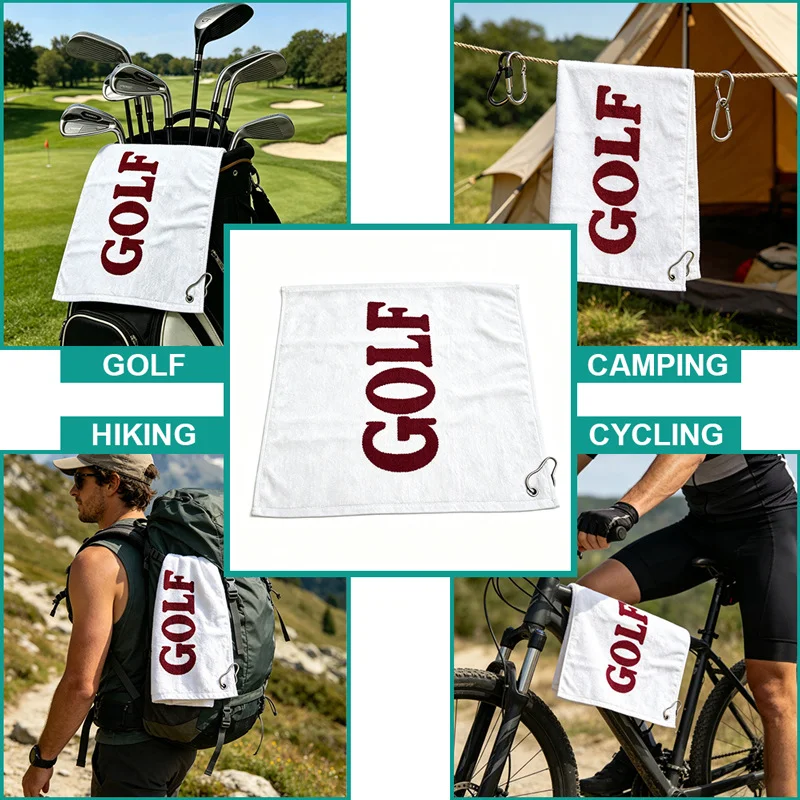
A brand orders 500 custom promotional golf towels for a summer tournament. The RFQ states: 40x40 cm microfiber waffle towel, loop clip, one-color logo screen print, individual poly bag, destination USA, arrival by June 1.
The custom promotional golf towels page shows a similar product path from specification to shipment.
Different products fail in different ways. The process is similar, but the inspection focus changes.
| Product type | Common risk | Key approval point |
|---|---|---|
| Apparel | Fit, shrinkage, seams, fabric substitution | Pre-production garment and size chart |
| Bags | Material weight, stitching, carton volume | Sample plus packed carton data |
| Drinkware | Leak, insulation, breakage, food-contact documents | Physical sample and document package |
| Patches | Small detail, border, backing | Physical patch sample |
| Keychains | Hardware strength, logo readability | Hardware and decoration sample |
| Towels | GSM, absorbency, edge stitching, print | Fabric sample and wash or feel check |
| Signs | Text accuracy, mounting, material | Proof and physical mounting sample |
This is why buyers should not use one generic QC checklist for every product. The workflow can be standard, but the checkpoints must match the product.
MOQ, sample cost, and lead time are confirmed in the RFQ for each product. The standard advice: allow time for one sample revision, state the target arrival date, and never let the freight plan be an afterthought.
MOQ is affected by material, tooling, printing, color split, packing, and SKU count. A standard product with one logo has a lower practical minimum than a custom-shaped product with several versions and retail packaging. If the buyer needs a small test order, simplify the specification first before negotiating MOQ.
Lead time should be counted from final approval, not from the first message. Production usually starts after deposit, final artwork, final sample approval, and final packing confirmation. If the buyer spends two weeks approving a sample, the delivery calendar moves by two weeks.
For seasonal or event orders, set internal cutoff dates. If sample approval misses the cutoff for sea freight, switch to air freight or simplify the order. Waiting and hoping rarely fixes the schedule.
Quality control should be planned before production. If the buyer wants AQL inspection, measurement reports, lab testing, or production photos, these should be in the order terms. Adding inspection requirements after production can cause delay.
Payment structure supports process control. A common structure is deposit to start production and balance before shipment after inspection or document review. For large orders, staged payments or L/C may be used. The key is to connect payment to milestones.
Do not pay 100% in advance for a bulk custom order unless there is a very specific reason and accepted risk. Keep leverage for quality control and shipment release. At the same time, pay deposits and balances on time once milestones are met, because delayed payment can miss production or freight schedules.
Bank details should be verified before payment. If a supplier changes account details by email, confirm through a known phone or video contact. Payment fraud is a real risk in international sourcing.
Freight cost depends on packed goods, not on product photos. Buyers should request carton length, width, height, gross weight, net weight, quantity per carton, and total carton count before freight is finalized. This is especially important for bulky bags, fragile drinkware, retail packaging, and gift sets.
The freight method should match deadline and volume. Express is fast and expensive, usually for samples and small urgent orders. Air freight is useful for urgent medium shipments. Sea freight is economical for volume but needs time. DDP can simplify the buyer side, while FOB gives more control to buyers with a forwarder.
For split shipments, tell the supplier before packing. The air portion may need separate cartons and labels. The sea portion may need different pallet or carton planning. Late split decisions create repacking work.
Before placing the order, ask:
These questions turn the process into a managed project instead of a series of surprises.
Custom production works best when each side knows what it owns. The supplier cannot approve your brand color, spelling, or retail packaging copy. The buyer cannot expect a supplier to hit a deadline if artwork, deposit, or sample feedback is delayed. Clear responsibility keeps the project moving.
| Stage | Buyer owns | Supplier owns |
|---|---|---|
| RFQ | Use case, target quantity, artwork, deadline, destination | Feasibility, MOQ, price, sample route |
| Proof | Text, logo approval, color references, layout approval | Technical layout, production method, proof file |
| Sample | Physical approval, correction notes, final decision | Sample production, revision support, spec confirmation |
| Production | Timely deposit, final approvals, change control | Material purchase, production scheduling, progress updates |
| QC | Acceptance standard, inspection decision | Internal QC, correction plan, production records |
| Packing | Retail or bulk requirements, barcode data | Packing execution, carton marks, carton data |
| Shipping | Incoterm decision, delivery deadline, document review | Freight coordination or handoff, shipping documents |
This table is useful when multiple people are involved. Marketing may approve artwork, procurement may approve price, finance may approve payment, and logistics may approve shipping. If the buyer's internal team is not aligned, the supplier receives mixed instructions.
Changes are normal, but unmanaged changes are expensive. A change to artwork, color, size, packaging, barcode, or delivery date can affect production schedule and cost. Once materials are purchased or production starts, changes may require rework or may not be possible.
Use a simple rule: any change after sample approval must be confirmed in writing with three answers. What exactly changes? Does it affect cost? Does it affect lead time? If the answer is unclear, do not assume the original schedule still holds.
For example, changing a golf towel logo color before printing may be easy. Changing towel size after fabric is cut is not. Adding individual poly bags after bulk packing may require reopening cartons. Changing the destination from a warehouse to an event venue may require new freight instructions. The earlier the change is made, the easier it is to control.
Inspection failure does not always mean the order is lost. It means the buyer and supplier need a correction plan. The right response depends on the defect type, quantity affected, deadline, and commercial impact.
Common options include rework, sorting, replacement, discount, partial shipment, and reinspection. Rework works for loose threads, packaging errors, some label mistakes, or minor assembly issues. Replacement is needed for unusable goods. Discount may be acceptable for minor cosmetic issues if the buyer can still sell or use the product. Partial shipment can help when part of the order is urgent and acceptable.
The buyer should avoid emotional or vague responses. Use the inspection report. Identify the defect, affected quantity, acceptable correction, and deadline. If the defect is outside the agreed tolerance, hold balance payment until the correction plan is confirmed. If the defect is within tolerance, release the order and record the issue for next time.
The first order should create a reorder file. Keep the approved sample, artwork, production photos, inspection report, carton data, supplier notes, and receiving feedback. This file makes the second order faster and more consistent.
For reorders, confirm whether the same material, color, hardware, packaging, and factory line are available. Do not assume that a reorder will automatically match the first batch. Material lots, coating batches, packaging suppliers, or trims can change. Send the previous approval file and ask the supplier to confirm what remains the same.
Receiving feedback is valuable. If cartons were too large, labels unclear, packaging damaged, or a size sold faster than expected, update the next RFQ. Good sourcing improves over repeated cycles because the buyer learns which details matter in real sales or distribution.
Before paying the production deposit, confirm:
If any item is missing, the order can still move, but risk increases. A short delay before deposit is usually cheaper than a long dispute after production.
For first-time buyers, this checklist also creates a repeatable internal workflow. The same structure can be reused for towels, bags, drinkware, signs, patches, and other custom products, with only the product-specific checkpoints changed.
When contacting us, include:
Best for buyers reviewing custom order process guide, related SKU images, RFQ details, MOQ, sampling, packaging, QC, and shipment planning from China.
It depends on the product, quantity, and shipping method. The full path is artwork and sampling, production, QC, packing, and freight. State the target arrival date in the RFQ and work backward from it.
For most custom products, yes. The physical sample confirms size, color, print, and construction before bulk production. It is the cheapest quality control step in the whole process.
An inspection of the finished batch against the approved sample and acceptance standard before the goods leave the factory. The report documents what was checked and becomes the basis for accepting or correcting the batch.
Send your artwork, target quantity, packing needs, destination country, and deadline to quote custom product process China with clear factory assumptions.
Data verified as of 2026-08-04. MOQ, lead time, packaging, and compliance scope should be confirmed against the actual order before purchase order approval.
Decision closure
Use the next step that matches your buying stage.
Go to factory-direct custom products without marketplace sourcing to build a normalized RFQ before comparing supplier quotes.
Go to direct factory communication for custom product orders to turn supplier messages into a controlled production record.
Go to the custom product brief form to send artwork, quantity, packaging, and destination details for review.