If you are still validating a first small batch
Go to custom products for startups under 500 units to check low-MOQ order logic before asking for bulk pricing.
Custom lanyards are a simple product with four decisions: material, width, print or dye method, and hardware. Polyester is the standard material, 15-20 mm is the readable range for event lanyards, and the print method splits into two routes - screen or heat-transfer printing for a logo on a solid strap, and sublimated (dyed) lanyards for full-color edge-to-edge designs. Hardware - clips, swivels, badge reels, and breakaway buckles - is half the product and a safety requirement in some markets. MOQ starts around 500 pieces for standard options. The answers below cover the decisions buyers actually make and turn a vague request into a quote-ready RFQ.
| Material | What it offers | Best use |
|---|---|---|
| Polyester | Standard, durable, printable, and lowest cost | Most event and ID orders |
| Nylon | Smoother surface and a more premium feel, with higher cost | Premium events and branded staff programs |
| Eco materials (recycled polyester, bamboo, cotton) | Sustainability story, usually with a higher unit price | Eco-themed events and CSR campaigns |
The custom event lanyards page shows current specifications for standard polyester options; sublimated lanyards cover the full-color route.
The best custom lanyard specification starts with the event or workplace use case. A one-day trade show, a multi-day conference, a school ID program, a hospital badge system, and a VIP access program all use the same basic product shape, but they do not need the same strap, print, or hardware.
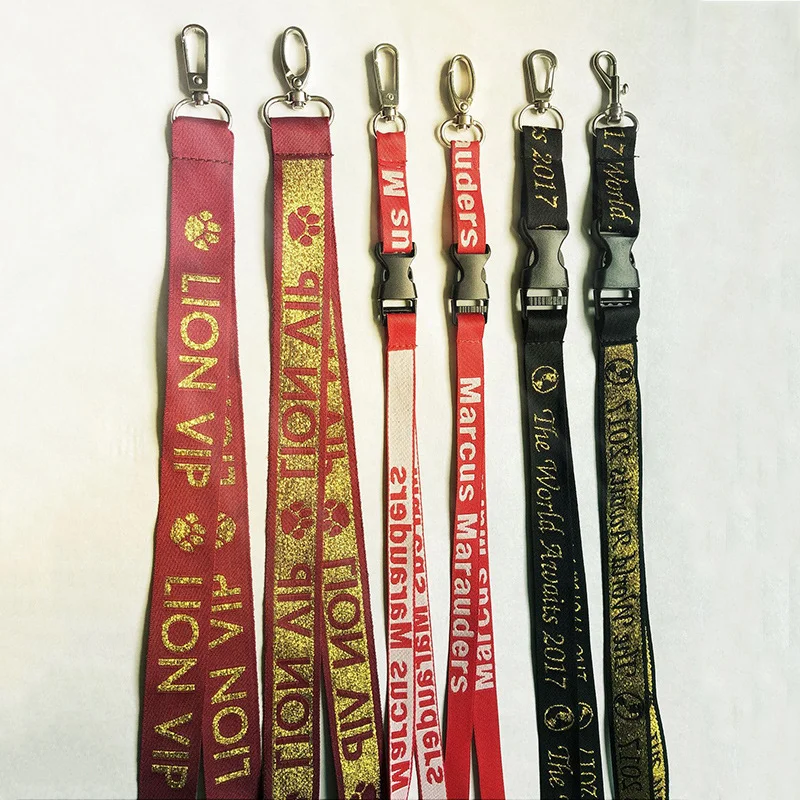
For conferences and trade shows, visibility and attendee flow matter. The lanyard may carry the event name, sponsor logos, badge holder, attendee type, or color-coded access level. A 15 mm or 20 mm strap is usually easier to read than a narrow strap. Breakaway buckles are often worth adding because the lanyards are worn by the public in crowded spaces.
For staff ID systems, durability matters more than one-day cost. A staff lanyard may be worn daily for months. The buyer should choose stronger hardware, comfortable material, stable printing, and a badge reel if the ID is scanned often. A cheaper event-grade lanyard may not be the right choice for daily access control.
For schools, youth programs, and public venues, safety is central. Breakaway buckles, softer materials, and simple hardware reduce risk. The buyer should confirm destination-market or institutional requirements before approving a non-breakaway design.
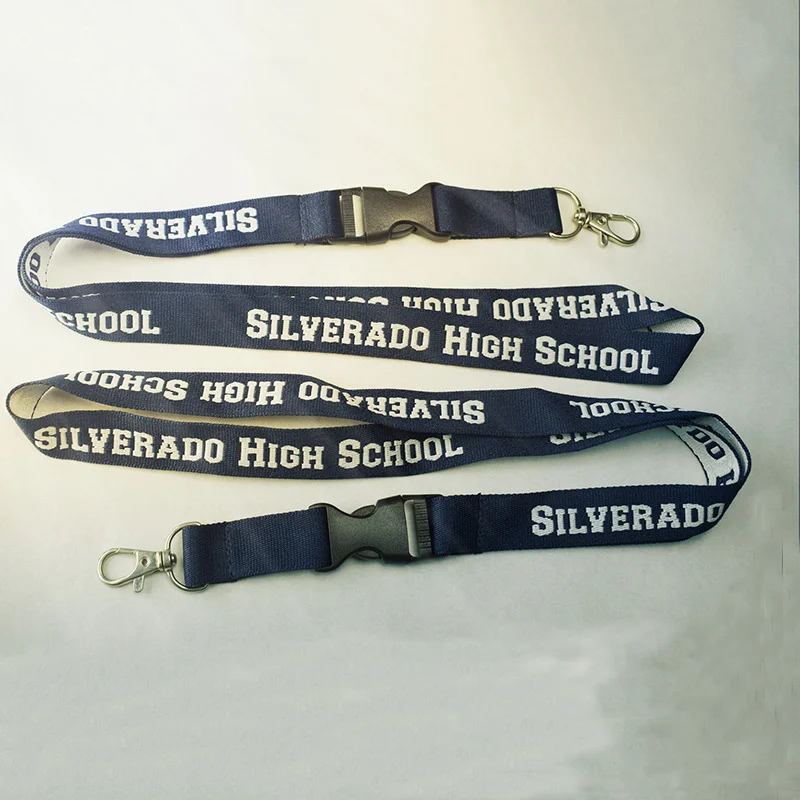
For premium brand events, the lanyard is part of the event experience. Nylon, woven, recycled polyester, sublimation, metal hardware, custom badge holders, or branded buckles can improve perceived value. These details cost more, but they may be justified when the lanyard appears in photos and remains with attendees after the event.
| Use case | Suggested spec | Main buying risk |
|---|---|---|
| One-day conference | 15-20 mm polyester, printed logo, metal or plastic clip | Late delivery and unreadable sponsor logos |
| Trade show with sponsors | 20 mm sublimated lanyard, double-sided design | Crowded artwork and color mismatch |
| Staff ID program | Polyester or nylon, badge reel, durable clip | Hardware failure from daily use |
| School or youth event | Breakaway buckle, lightweight strap, simple print | Safety and comfort |
| VIP pass | Wider strap, premium material, metal hardware | Finish quality and presentation |
| Security/access control | Badge reel, swivel hook, breakaway if required | Badge orientation and scanning convenience |
| Eco event | Recycled polyester, bamboo, or cotton | Higher cost and material availability |
Use this matrix as a starting point. The final decision should also consider event length, badge weight, sponsors, budget, and deadline.
| Width | What it offers | Best use |
|---|---|---|
| 10 mm | Slim and lightweight | Simple ID use, children's events, minimal text |
| 15 mm | Good readability and balanced cost | Standard event lanyards |
| 20 mm | Larger print area and stronger brand visibility | Sponsor logos and double-sided printing |
| 25 mm+ | Wide, premium, and stronger for heavier IDs | VIP badges, heavy passes, safety credentials |
Width drives print legibility and cost: a detailed logo needs at least 15-20 mm, while 10 mm straps suit simple text or minimal marks. Standard length is around 90 cm; confirm the length for the audience and attachment point.
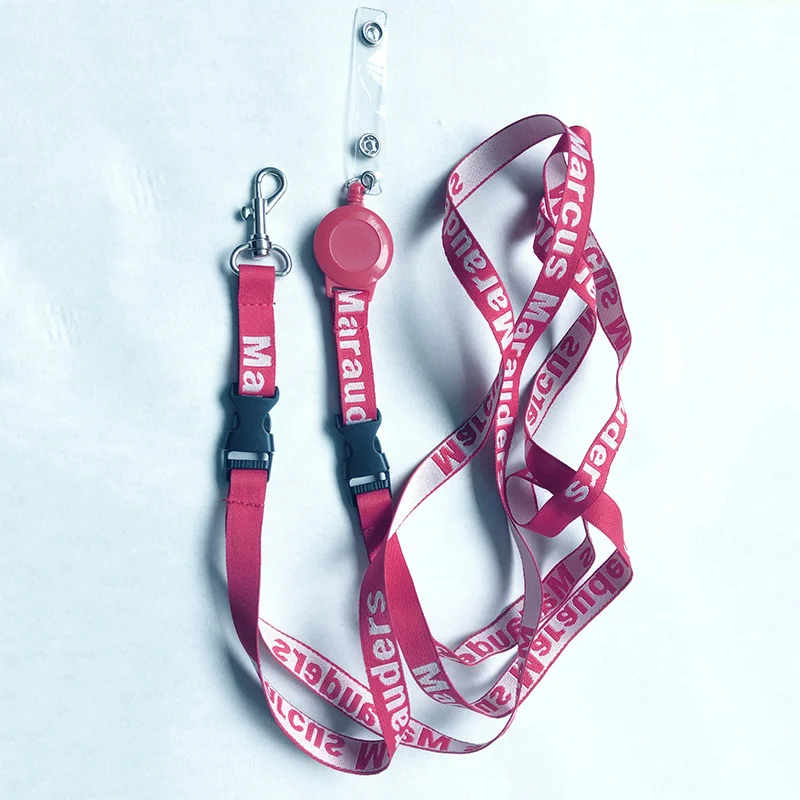
Width is also a branding decision. A 10 mm strap can look clean and minimal, but it gives very little room for text. A 15 mm strap is a practical standard for many events. A 20 mm strap gives more space for sponsor logos, attendee categories, and double-sided printing. A 25 mm strap feels more substantial but costs more and may feel bulky for a simple badge.
Length should match the wearer and badge position. A standard adult length may place the badge too low for children or too high for some badge holders. If the lanyard is used with a badge reel, the reel position changes how the badge hangs. If it is used with a large credential, the strap and hardware must support the weight without twisting.
For international events, think about body size and clothing. A very short lanyard can feel uncomfortable over jackets or uniforms. A very long lanyard can swing too much and make scanning difficult. If the order is large, approve a physical sample with the actual badge holder attached.
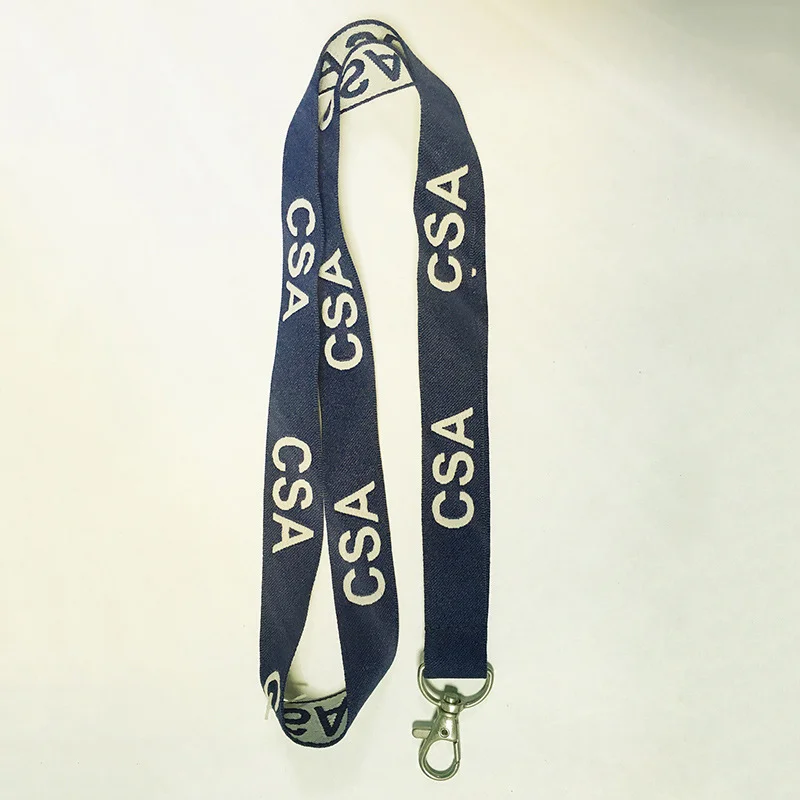
There are two visual routes for lanyard branding:
Woven lanyards are a third route: the logo is woven into the fabric, giving a textured, durable, premium look at a higher cost and with less color range.
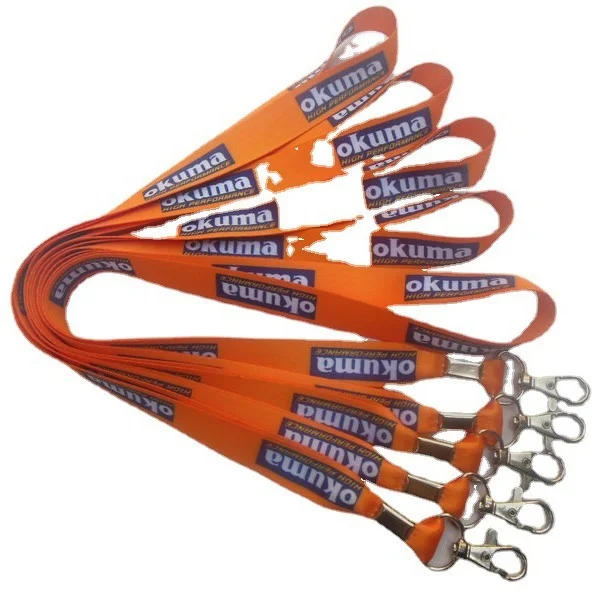
Printed lanyards are the economical route when the strap is one base color and the logo is simple. Screen printing is common for one or two colors. Heat transfer can help with more detail, but the buyer should sample the hand feel and adhesion. Printed logos sit on the surface, so the sample should be checked for cracking, rubbing, and edge clarity.
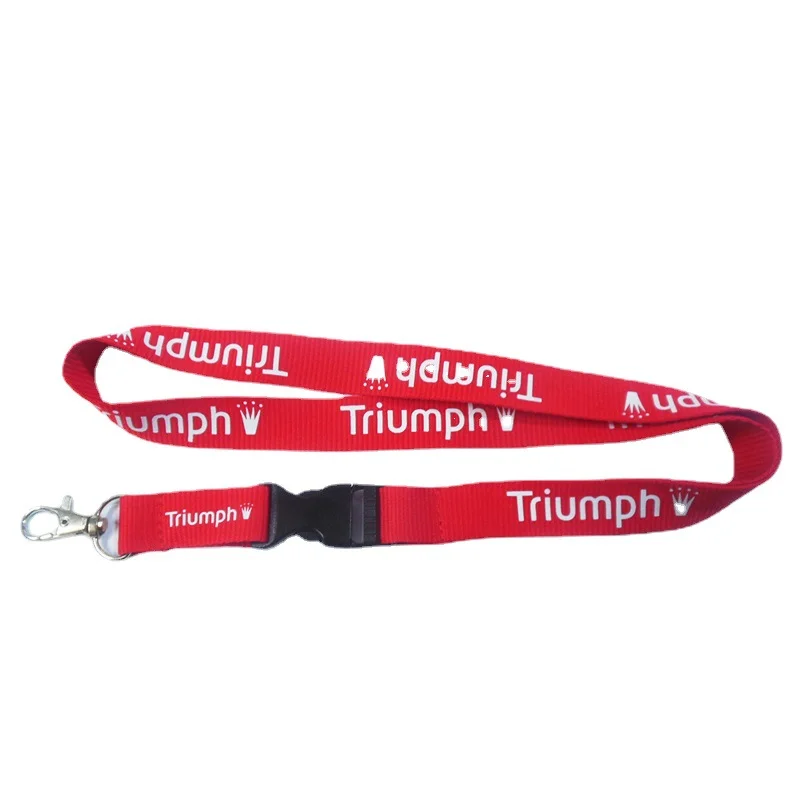
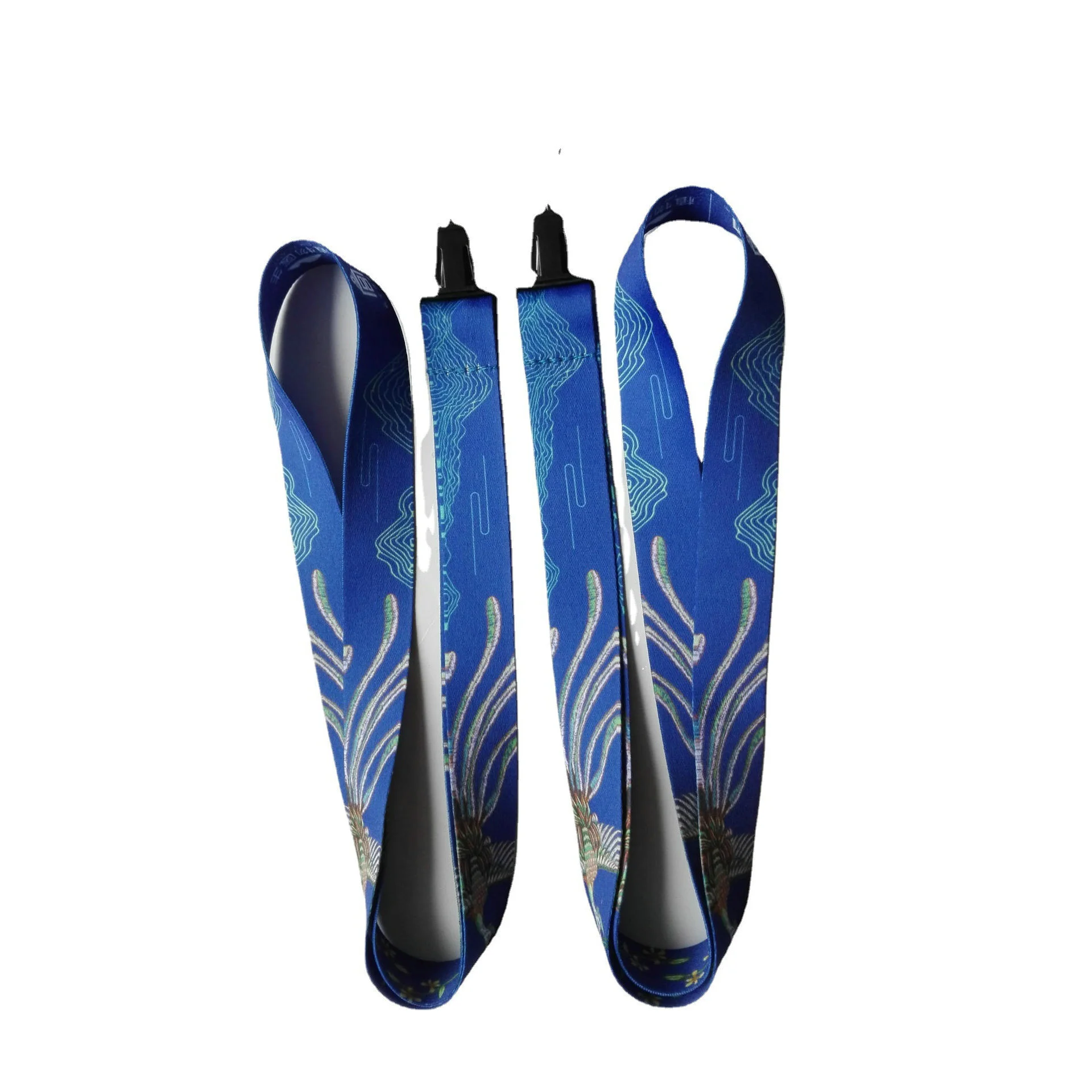
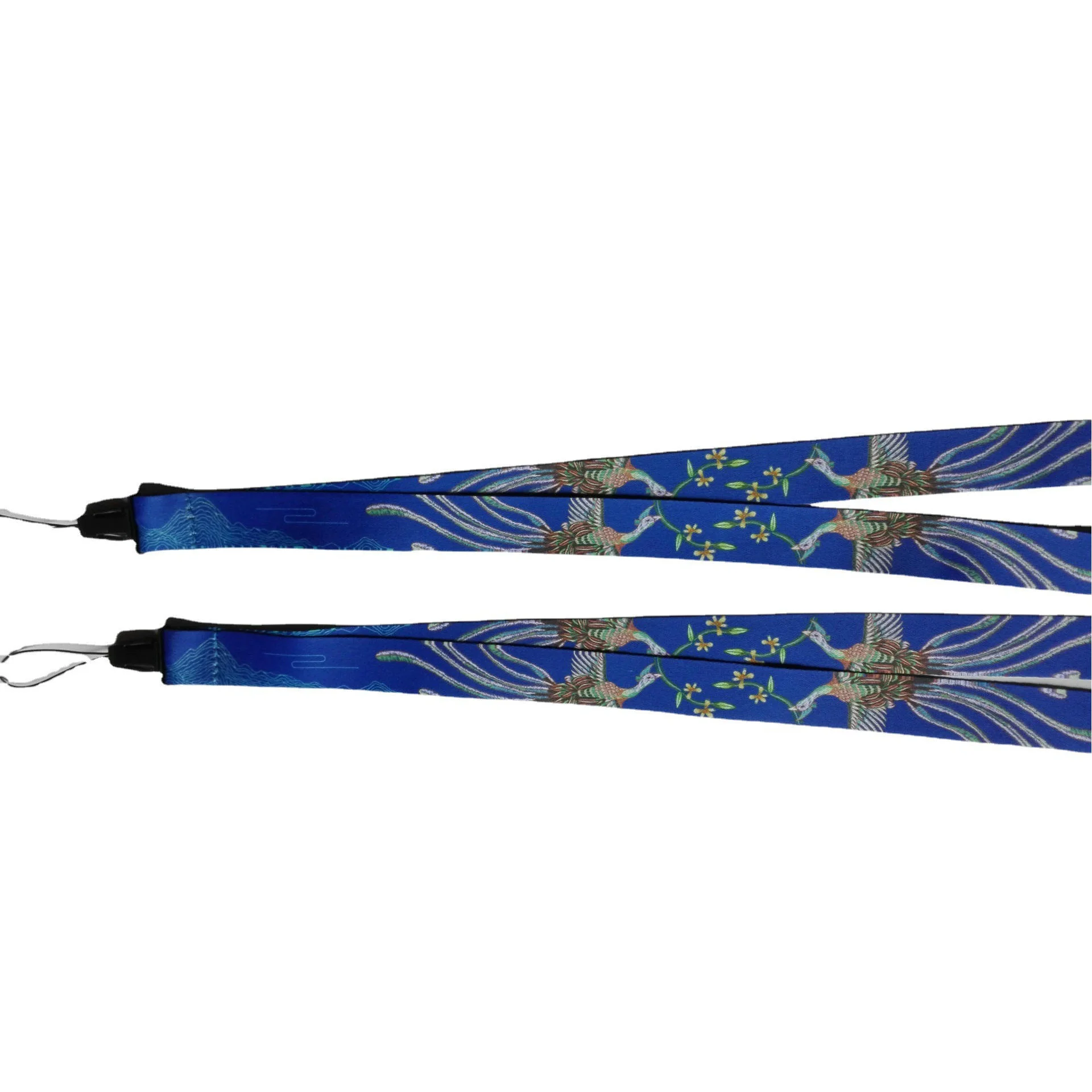
Sublimated lanyards are best when the whole strap becomes the design. They work well for gradients, full-color graphics, repeated sponsor marks, patterns, and event identity systems. Because the design is dyed into the material, it can run edge to edge. The buyer should still check color accuracy and whether small text remains readable on the finished width.
Woven lanyards feel more textile and permanent. They can look premium for staff programs, clubs, and branded merchandise, but they do not reproduce photographic artwork. The logo must be simplified into weave-friendly shapes. If the design needs gradients, use sublimation instead.
Double-sided designs should be specified early. One side may carry the event brand while the other carries a sponsor, safety message, attendee category, or website. Double-sided print can improve visibility because lanyards twist during wear. It also changes setup and inspection, so it belongs in the first RFQ.
| Hardware | What it offers | Best use |
|---|---|---|
| Plastic clip | Standard and low cost | Most event orders |
| Metal swivel hook | Durable and rotates to reduce twisting | Professional events and long-term ID use |
| Badge reel | Pull-out badge access | Trade shows, access control, frequent scanning |
| Breakaway buckle | Releases under force for safety | Public events, schools, some workplace environments |
| Magnetic connector | Clean premium attachment without piercing clothing | Premium programs and fabric-sensitive use |
Breakaway buckles are required in some markets and work environments for safety, and are a sensible default for event lanyards worn by the public. Confirm the requirement for your destination and use case.
Hardware is not a minor accessory. It controls how the lanyard works. A badge that flips backward all day creates frustration. A weak clip can drop the credential. A non-breakaway strap in the wrong environment can create safety concerns. The buyer should choose hardware according to the badge, use frequency, and wearer environment.
Metal swivel hooks are practical when the badge needs to rotate freely. They reduce twisting and feel more durable than basic plastic clips. Plastic clips are cheaper and lighter, which works for simple events. Badge reels are useful when attendees or staff scan cards frequently at doors, time clocks, or access points. Magnetic connectors can look premium, but the buyer should confirm whether they are appropriate for the badge weight and environment.
Badge holders should be included in the RFQ if needed. A lanyard with no badge holder is not the same delivered product as a lanyard with a clear PVC holder, card sleeve, or hard badge case. Holder size, orientation, thickness, and slot position affect the hardware choice.
Many lanyard problems happen because the strap is quoted without the badge system. Before ordering, confirm whether the lanyard will attach to a punched badge, plastic badge holder, card sleeve, RFID card, event pass, whistle, keys, or USB drive. Each attachment has different weight and orientation.
Badge holders come in portrait and landscape formats. They may be soft PVC, rigid plastic, resealable, waterproof, or zip-lock style. If the badge is printed separately, confirm the badge size before choosing the holder. A holder that is slightly too small can bend the badge. A holder that is too large looks cheap and swings too much.
Badge reels are useful for staff ID and access control. They allow the user to pull the card to scan without removing the lanyard. If using reels, check cord length, spring strength, reel housing, attachment method, and whether the badge returns smoothly. A poor reel fails faster than the strap.
If keys or tools are attached, the hardware must be stronger than an event badge hook. For heavy attachments, choose a wider strap and better metal hardware. Test the sample with the actual item attached.
Lanyard artwork should be designed for a long narrow strip. A layout that looks good on a square card may not work on a strap. Repeated logos, simple icons, and short text work better than long slogans. Sponsor layouts should be tested at actual width before approval.
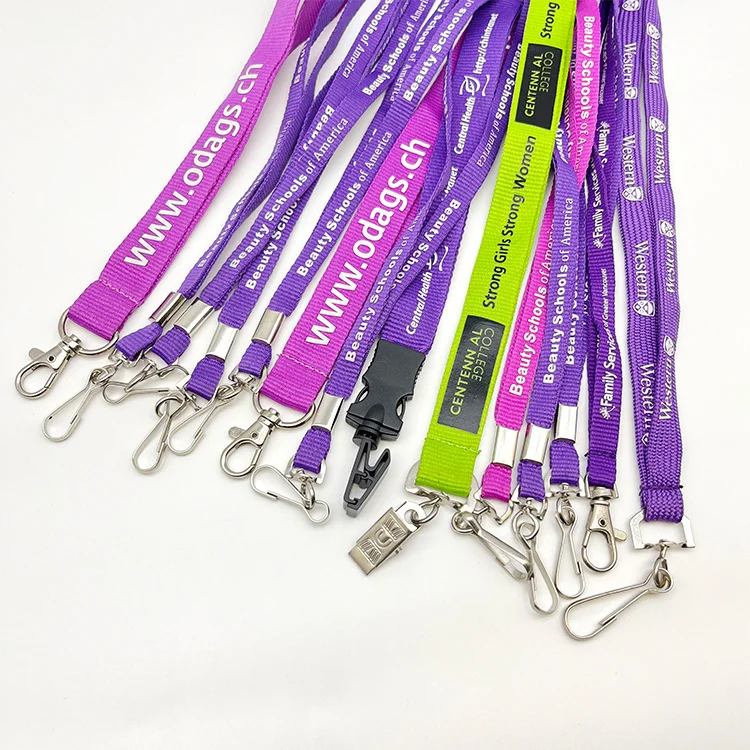
For 10 mm straps, avoid small text. Use a simple mark or one short word. For 15 mm straps, most standard event logos can work if simplified. For 20 mm straps, sponsor names and double-sided layouts become easier. For 25 mm straps, large logos and bold patterns can look strong, but the strap may feel less subtle.
If the lanyard uses sublimation, ask for a template showing safe area, bleed, and repeat length. If the design repeats, confirm how the repeat looks after cutting and stitching. If the lanyard has a breakaway buckle, the design may be interrupted at the neck. If it has a clip area, important text should not be placed too close to the hardware seam.
Pantone references help for printed lanyards, but sublimation color can shift depending on fabric and dye. Approve a physical sample if brand color is important. For eco materials such as cotton or bamboo, the base material color can also affect print appearance.
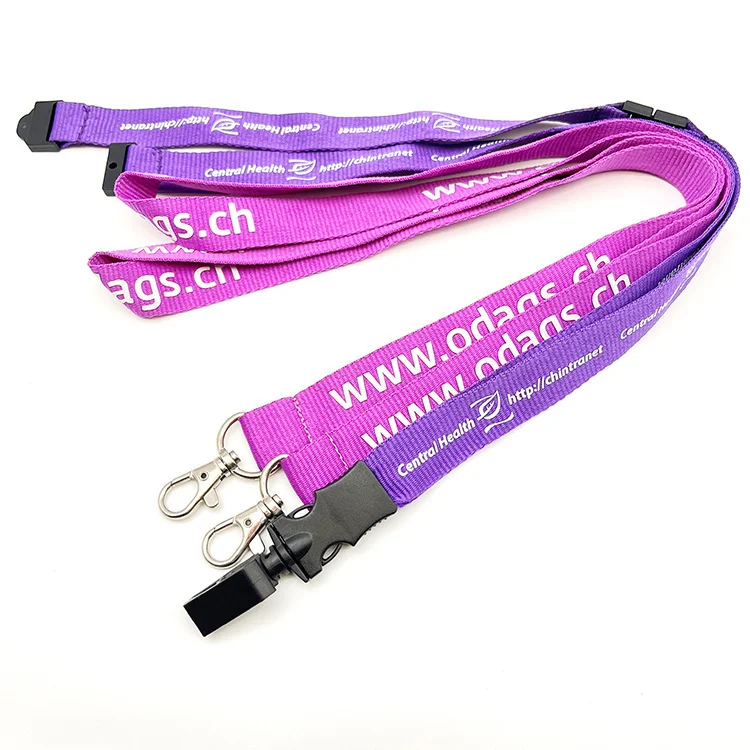
MOQ depends on material and print method - the custom event lanyards page shows current minimums for standard options. Sublimated lanyards allow full-color designs at moderate volume; woven lanyards have their own minimums. Confirm the exact MOQ for your configuration in the RFQ.
For first orders, approve a physical sample checking width, print color, hardware, and feel before bulk production. A photo cannot show print quality or hardware finish. Lead time is a few weeks for standard orders; dyed lanyards and large quantities need more time. Event deadlines should be stated in the RFQ so production and freight are scheduled around the date.
MOQ can change when the buyer adds hardware, double-sided print, multiple strap colors, badge holders, or individual packing. A 1,000-piece order in one design is simpler than 1,000 pieces split across five attendee categories. If the event needs staff, VIP, speaker, sponsor, and visitor lanyards, ask for MOQ per design and per color.
Sample approval should include the complete assembly. Check the strap, print, dye, stitching, clip, breakaway buckle, reel, badge holder, and packing. If the sample uses substitute hardware, note that clearly before bulk production. A lanyard can pass visual approval and still fail if the badge holder is wrong or the breakaway buckle releases too easily.
For event orders, set a latest sample approval date. Lanyards are often needed for a fixed conference or trade show. If approval slips, the buyer may need air freight or simplified production. A schedule should include artwork proof, sample, bulk production, packing, freight, customs, and delivery to the event site.
For printed lanyards, rub the sample lightly to check print adhesion. For sublimated lanyards, inspect edge-to-edge dye quality and whether the print fades near seams. For woven lanyards, check whether the logo is readable and whether the weave feels too rough. For all types, check that the cut ends and stitching are secure.
For safety hardware, test several pieces, not just one. Breakaway buckles should release under force but not fall apart during normal wear. Clips should hold the badge securely. Reels should retract consistently. These functional checks are as important as logo color.
Lanyards are light, flat, and foldable, so shipping is cheap by any method and efficient by sea at quantity. Confirm FOB or CIF terms and the packed carton size in the RFQ. See how to order for delivery terms.
Because lanyards are compact, express shipping can be practical for samples and urgent event orders. For larger quantities, air or sea freight may be more economical depending on deadline. Badge holders, reels, and retail packaging can increase carton volume, so packed carton size still matters.
Packing should match the event workflow. Bulk packing is cheapest, but event teams may need lanyards counted in bags of 50 or 100 for registration desks. VIP or staff versions should be packed separately. If badges and lanyards are assembled before shipment, confirm whether the supplier is responsible for assembly and how the finished sets are labeled.
For events, delivery address matters. Shipping to an office, warehouse, hotel, convention center, or event decorator can require different timing and receiving instructions. Put the target arrival date and delivery address in the RFQ.
Many lanyard orders are part of a larger event identity system. The buyer may also need wristbands, badge holders, badges, PVC cards, ticket holders, tote bags, or staff passes. Matching these items can improve the event look and simplify procurement.
Tyvek wristbands are useful for short-term entry control because they are lightweight, low cost, and tamper-evident. Silicone wristbands work better as keepsakes or merchandise. Fabric wristbands are stronger for multi-day events. If the buyer orders lanyards and wristbands together, color matching and artwork consistency should be checked across both products.
When several event items are ordered together, create a master artwork file or brand sheet. Include logo versions, colors, attendee categories, sponsor placement, and naming rules. This prevents the lanyard, wristband, badge, and signage from looking like separate projects.
A clear lanyard RFQ might read:
Product: custom event lanyard for conference. Material: polyester. Width: 20 mm. Length: 90 cm. Print: sublimated full-color, double-sided. Hardware: metal swivel hook plus safety breakaway buckle. Badge holder: clear PVC landscape holder for 100 x 80 mm badge. Quantity: 5,000 attendee lanyards, 500 staff lanyards in a different color. Packing: 100 pieces per bag, attendee and staff versions packed separately. Destination: Las Vegas convention center, required arrival date May 10.
This RFQ gives the supplier the real production and packing requirements. It also makes the quote more accurate because hardware, badge holder, version split, packing, and deadline are already included.
For a daily staff ID program, the RFQ would be different:
Product: staff ID lanyard. Material: nylon or high-grade polyester. Width: 15 mm. Logo: one-color screen print. Hardware: badge reel plus metal clip and breakaway buckle. Quantity: 2,000 pieces. Use: daily employee ID scanning. Please quote sample, pull test, reel function, and packed carton size.
Before approving a lanyard quote, ask:
When contacting us, include:
Best for buyers reviewing faq long-form guide, related SKU images, RFQ details, MOQ, sampling, packaging, QC, and shipment planning from China.
MOQ depends on material and print method. Standard polyester options start around 500 pieces; sublimated and woven lanyards have their own minimums. Confirm the exact MOQ for your configuration in the RFQ.
Polyester is the standard - durable, printable, and cost-effective. Nylon is smoother and slightly more premium. Eco options (recycled polyester, bamboo, cotton) are available and suit sustainability-focused events, usually at a higher unit price.
Printed lanyards use screen printing or heat transfer for the logo on a solid-color strap. Dyed or sublimated lanyards have the design dyed into the fabric, allowing full-color and edge-to-edge patterns. Dyed lanyards look more premium and hold color better but cost more per unit.
Send your artwork, target quantity, packing needs, destination country, and deadline to quote custom lanyards FAQ with clear factory assumptions.
Data verified as of 2026-08-04. MOQ, lead time, packaging, and compliance scope should be confirmed against the actual order before purchase order approval.
Decision closure
Use the next step that matches your buying stage.
Go to custom products for startups under 500 units to check low-MOQ order logic before asking for bulk pricing.
Go to small batch custom logo products from China to choose practical logo, packaging, and MOQ routes.
Go to the custom product brief form to send artwork, quantity, packaging, and destination details for review.