If you are trying to avoid marketplace listing noise
Go to factory-direct custom products without marketplace sourcing to build a normalized RFQ before comparing supplier quotes.
Custom golf tees wholesale orders should be quoted by specification, not by unit price alone. The price depends on material, length, logo method, body color, color split, packing, quantity, sample approval, and freight. For simple printed wood tees from China, MOQ commonly starts around 1,000 pieces. For mixed-color orders, retail packs, custom boxes, bamboo tees, plastic tees, or biodegradable materials, the MOQ and setup cost can be higher.
Wholesale custom golf tees from China are usually sourced as wood, bamboo, plastic, nylon, or biodegradable tees. Buyers should choose the material by use case: birch wood for tournament giveaways, bamboo for sustainability campaigns, plastic or nylon for reusable retail packs, and custom packaging for pro shops or resorts. The RFQ should specify length, material, logo method, color split, packing, quantity, destination, and deadline. The main quality checks are tee length, straightness, print clarity, body color, cracks, splinters, broken tips, packing count, and carton labels.
Most pages ranking for custom golf tees wholesale are order pages. They show logo tees, bulk pricing language, and product photos, but they often skip the buying decisions that determine whether two quotes are actually comparable. A buyer can see that wood tees, plastic tees, and personalized packs exist, yet still not know which material, length, packing format, or print method should be used for a real order.
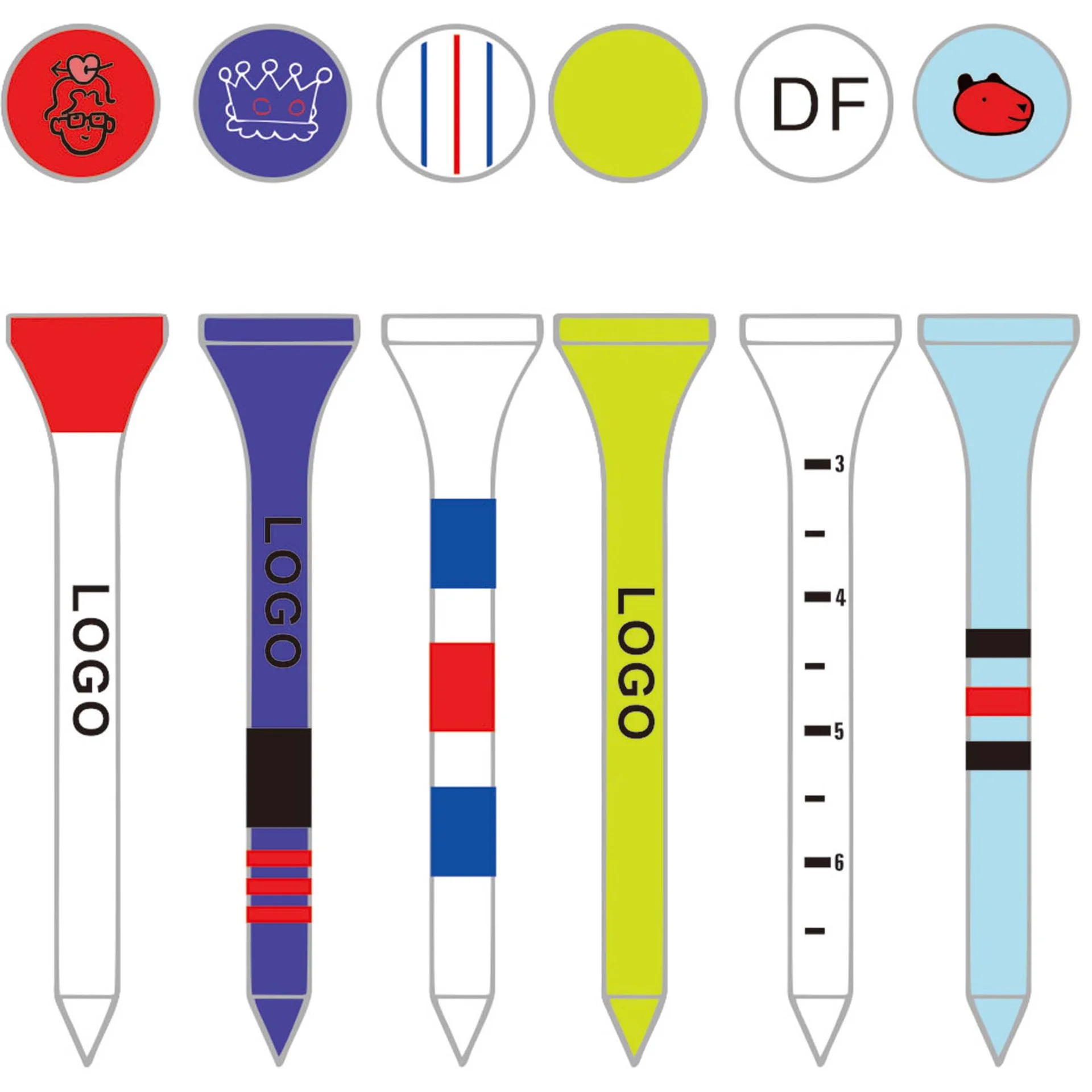
The second intent, wholesale personalized golf tees, is usually closer to promotional purchasing. These buyers may be preparing a golf outing, charity tournament, sponsor kit, or club gift. They need practical buying guidance: how many tees per player, how to pack them, what logo detail will survive on a small surface, and how early to start before the event.
The third intent, golf tee suppliers China, is supplier-selection intent. Marketplace and directory pages can list factories, but they rarely explain how to compare suppliers. A factory that quotes a bare wood tee in bulk bags is not comparable to a supplier quoting a 3-piece header-card pack with barcode labels and DDP delivery. This guide fills that gap by turning the product into a specification, then showing how to compare suppliers against that specification.
For on-page SEO and generative answer coverage, the article should answer these direct buyer questions:
This guide is for buyers who need more than a product listing page. It is written for golf tournament organizers, promotional product distributors, country clubs, resorts, corporate sponsors, pro-shop buyers, event agencies, and private label golf accessory brands comparing custom golf tees wholesale suppliers.
It is also useful for buyers searching for wholesale personalized golf tees but not yet sure which specification to choose. A buyer may know they want logo golf tees, but still need to decide whether the order should be a low-cost tournament giveaway, a resort amenity kit, a retail header-card pack, or a private label product line. Those are different orders, even when the product name looks the same.
The guide also covers the "golf tee suppliers China" intent. Directory and marketplace pages can show many factories, but they rarely explain how to compare quotes. A useful supplier comparison starts with the same specification, the same packing requirement, the same color split, the same sample expectation, and the same delivery term.
A custom golf tee quote should start with a clear buying brief. If the buyer sends only "custom golf tees, 5,000 pieces," the supplier must guess the material, length, print method, packing, and freight. Those guesses create a low first quote that changes later.
Confirm these details before asking for price:
| RFQ item | Why it matters | Example |
|---|---|---|
| Quantity | MOQ and unit cost depend on volume | 5,000 pcs |
| Color split | Each body color can affect setup and packing | 3,000 white + 2,000 natural |
| Length | Changes use case and print area | 2.75 in or 3.25 in |
| Material | Drives cost, durability, and positioning | Birch wood, bamboo, plastic |
| Logo method | Changes setup cost and print durability | Sticker, screen print, direct print |
| Artwork | Determines whether the logo can be printed clearly | Vector PDF or AI file |
| Packing | Can change cost more than the tee itself | Bulk bag, player kit, header card |
| Destination | Needed for freight and landed cost | USA, Canada, Australia |
| Deadline | Critical for tournaments and retail launches | Must arrive by May 15 |
The custom personalized golf tees page is the related product path for this item. Use the article for decisions, then use the product page when the specification is ready for quotation.
The best golf tee is not the same for every buyer. A tournament giveaway should be simple and on time. A resort amenity kit should feel clean and coordinated. A retail pack should look good on a shelf. A sustainability campaign should avoid weak environmental claims. Choosing by order type prevents both over-specification and under-specification.
| Order type | Best specification direction | Main buying risk |
|---|---|---|
| Tournament giveaway | Standard wood tee, simple logo, bulk or kit packing | Late delivery or unreadable logo |
| Corporate sponsor event | Wood or bamboo tee, clean one-color mark, player-pack quantity | Poor color match or weak packing count |
| Country club / resort | Birch, bamboo, or polished plastic tee with cleaner packing | Cheap presentation that does not fit the venue |
| Pro-shop refill | Bulk wood or plastic tees, clear carton count | Inconsistent quantities and mixed colors |
| Retail header-card pack | Tee + printed card + barcode + individual bag | Packaging not approved before production |
| Private label line | Consistent material, color, logo, SKU label, reorder record | Supplier changes spec on reorder |
| Sustainability campaign | Bamboo or documented biodegradable material | Unsupported "eco" or "compostable" claims |
For a one-day tournament, the buyer should prioritize lead time, readable logo, simple packing, and carton count. The tee may be used once, so premium decoration usually does not improve the outcome.
For a resort or country club, the tee stays inside a brand experience. The material, color, and packing should match the venue. A simple birch tee can work, but the presentation should not look like a low-cost handout.
For retail, the packaging is part of the product. Header cards, retail boxes, barcodes, warning text, country-of-origin labeling, and inner bagging should be quoted from the beginning. A good tee in weak packaging can still fail at retail.
Use the matrix below when the buyer is not sure how to brief the supplier. It turns common buying situations into a quote-ready direction.
| Buyer situation | Recommended starting spec | Why |
|---|---|---|
| Lowest-cost tournament handout | 2.75 in birch wood tee, one-color logo, bulk or small bag | Keeps cost low and production simple |
| Sponsor player bag | 2.75 in wood tee, logo on shaft, 3-10 tees per bag | Easy to count and distribute |
| Golf resort welcome kit | Birch or bamboo tee, clean logo, custom sleeve or small box | Better presentation fits hospitality use |
| Pro-shop counter pack | Wood or plastic tee, header card, barcode, consistent pack count | Retail shelf needs packaging discipline |
| Private label test order | One material, one length, one body color, approved card design | Reduces variables for first production |
| Eco-positioned campaign | Bamboo tee or documented biodegradable material, conservative claim | Avoids unsupported environmental language |
| Reorder program | Same approved sample, artwork, packing, carton count, supplier record | Keeps repeat production consistent |
This matrix is not meant to replace supplier advice. It is a starting point that keeps the buyer from asking for a vague quote. Once the supplier sees the artwork, quantity, and packing need, they can recommend whether the specification should be simplified or upgraded.
Material is the first real specification decision. It affects price, user experience, durability, print quality, and marketing position.
| Material | Best use | Advantage | Watch point |
|---|---|---|---|
| Birch wood | Tournament giveaways, standard promo orders | Classic feel, clean print surface, low cost | Can break during play, which is normal |
| Whitewood | Cost-sensitive bulk orders | Lower material cost | Softer feel and less premium appearance |
| Bamboo | Resorts, sustainability campaigns, golf brands | Renewable-material story, harder feel | Ask for material details before making claims |
| Plastic | Reusable tees and retail packs | Durable and color-consistent | Molding and print method affect cost |
| Nylon | Premium reusable tee programs | Stronger than basic plastic | Higher cost; confirm flexibility and finish |
| Biodegradable compound | Environmental campaigns | Supports sustainability positioning | Claims need documentation and careful wording |
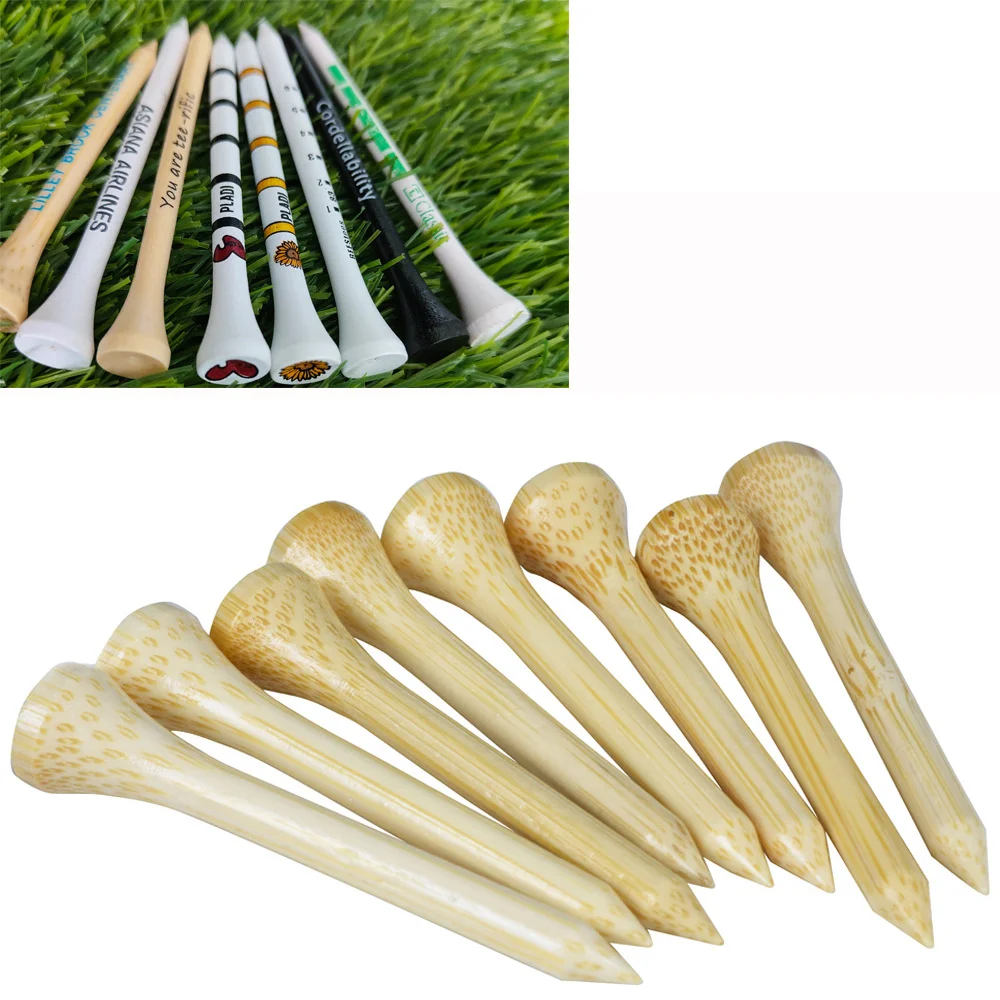
Birch wood is the safest default for most custom golf tees wholesale orders. It is familiar to golfers, prints clearly, and keeps cost manageable. Bamboo is useful when the product story matters, but the buyer should still confirm finish, packaging, and claim language. Plastic and nylon make sense when the tee is meant to be reused or sold as a durable accessory.
Biodegradable materials need extra care. A supplier may use the term broadly, but degradation depends on material composition and conditions. If the claim will be printed on packaging, ask for documentation and keep wording conservative.
Length changes how the tee is used and how much print area is available. It should be stated in the RFQ instead of left to supplier default.
| Length | Common use | Buying note |
|---|---|---|
| 2.125 in | Shorter tees and some iron/hybrid preferences | Less print area |
| 2.75 in | Standard tournament and promotional tee | Most common default |
| 3.25 in | Driver tee for larger club heads | More visible but slightly more material |
| 3.5 in+ | Specialty retail assortments | Confirm actual demand before ordering |
Most promotional golf tee buyers choose 2.75 in because it fits a wide range of golfers and keeps packing simple. A 3.25 in tee is useful for driver-focused programs or retail packs that advertise taller tees. If the pack includes mixed lengths, list the exact quantity by length in the RFQ.
Custom shapes are possible but usually unnecessary for a first wholesale order. Standard shapes keep cost, sampling, and replacement easier. If the buyer wants a unique head shape or private mold, ask whether tooling is required and whether the supplier has existing mold options.
The print method should match the logo, material, and quantity. A complex full-color logo on a tiny tee can create more problems than value.
| Method | Best for | Pros | Cons |
|---|---|---|---|
| Sticker label | Colorful wood or bamboo tee orders | Low cost for color logos | Edge lift must be checked |
| Screen print | Simple one-color or two-color marks | Clean and durable | Setup cost per color |
| Pad print | Curved or small print areas | Useful for small items | Color registration needs review |
| Direct / UV print | Plastic or higher-value programs | Sharp result, better detail | Higher cost than simple sticker |
| Foil / premium mark | Gift sets or luxury packs | Strong presentation | Rarely worth it for bulk giveaways |
For tournament orders, a sticker label or simple screen print usually gives the best cost-to-visibility result. For retail or private label orders, direct print or screen print may look more professional. The supplier should recommend a method only after seeing the artwork and the required quantity.
Golf tees have a narrow printable area. This is where many buyers make mistakes. A logo that works on a website, tent banner, polo shirt, or golf bag may not work on a tee shaft.
Prepare artwork at actual size. Print the logo at the intended tee size and check whether it is readable at arm's length. Remove tiny taglines, thin outlines, small registration marks, and fine gradients. If the logo includes several colors, ask whether the print method can hold registration at that scale.
Vector files are strongly preferred. AI, EPS, SVG, or editable PDF files give the supplier clean edges. A PNG or JPG can be included as a visual reference, but it should not be the only production file. If the buyer needs Pantone matching, list the Pantone numbers in the RFQ and compare the sample under normal light.
For retail packs, separate tee artwork from packaging artwork. The tee should carry a simple mark. The header card or box can carry the larger story, barcode, claims, QR code, product name, or care note.
Color split is one of the details that often causes quote changes. A 5,000-piece order in one color is easier than 5,000 pieces split across five body colors. Each body color may require separate handling, separate counting, separate packing, and sometimes a separate setup.
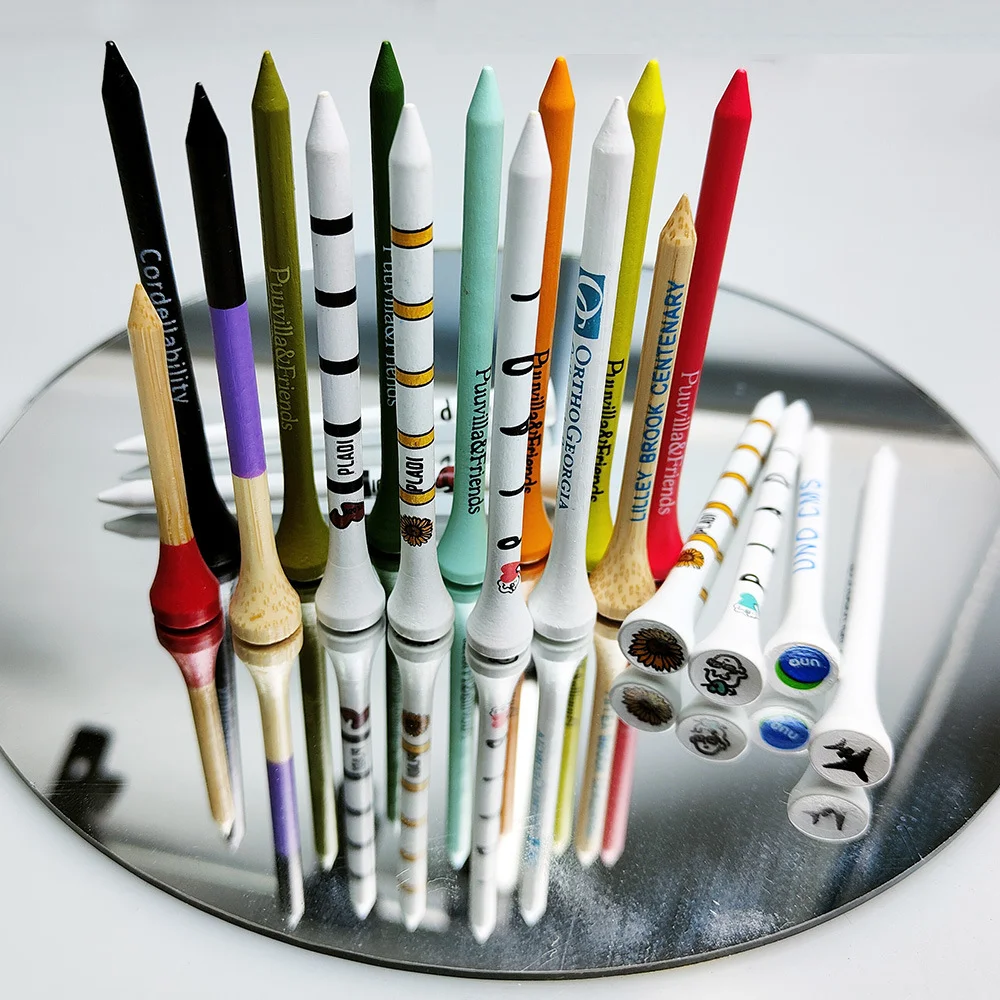
Common wood tee colors include natural wood, white, black, red, blue, yellow, green, and custom-painted colors. Natural wood and white are usually easiest. Pantone-matched painted tees can be possible, but the buyer should confirm tolerance. Wood paint, plastic material color, and printed logo color do not always match exactly.
For event kits, color split can help organize sponsor tiers or player groups. For retail, color split can make the pack more attractive. For cost control, keep the first order simple: one length, one material, one or two colors, and one logo method.
Packing can change both cost and perceived value. It can also change carton volume, shipping cost, and event logistics.
| Packing type | Best use | Notes |
|---|---|---|
| Bulk poly bag | Pro-shop refills and lowest-cost orders | Cheapest, but weak presentation |
| Inner bag by count | Tournament kits and easy counting | Helps event teams distribute quickly |
| Individual poly bag | Cleaner giveaway or retail prep | Adds labor and material cost |
| Header card pack | Retail display and sponsor kits | Requires artwork and card approval |
| Custom paper box | Resort gifts and private label sets | Strong presentation, higher cost |
| Mixed kit | Tee + ball marker + pencil + divot tool | Needs exact pack count and component QC |
A tournament organizer may need two or three tees per player bag. A pro shop may need bulk counts for refill bins. A resort may need a small paper sleeve or gift box. A retail brand may need header cards, barcode labels, country-of-origin marking, and outer carton labels. These should be quoted from the beginning.
MOQ for simple custom printed golf tees commonly starts around 1,000 pieces. The exact number depends on material, color split, print method, and packing. Sticker label orders can be easier at lower quantities, while screen print, special color, custom retail packaging, or mixed kits may need a higher minimum.
Sampling should not be skipped for a first order. A digital proof can confirm layout, but a physical pre-production sample confirms tee length, material feel, print clarity, body color, label adhesion, packing, and overall appearance. If the order includes a header card or box, approve the packaging sample too.
Lead time should be planned in stages:
If the tees are needed for a fixed event, do not plan from factory production time alone. Freight and customs can be the part that breaks the schedule.
Golf tees look inexpensive, but a correct quote has several cost blocks. A buyer comparing suppliers should ask what each quote includes.
| Cost block | What affects it | Buyer action |
|---|---|---|
| Material | Wood grade, bamboo, plastic, nylon, biodegradable compound | Compare the same material |
| Length | Standard or taller tee | State length clearly |
| Logo setup | Sticker, screen, pad, direct, UV | Ask setup fee and included colors |
| Body color | Natural, painted, Pantone, mixed colors | List color split |
| Packing | Bulk, inner bag, header card, box | Quote packing separately |
| Sample | Digital proof, physical sample, sample freight | Approve before bulk |
| Inspection | Internal QC or third-party check | Use for retail and event orders |
| Freight | Express, air, sea, DDP | Ask carton dimensions |
The cheapest quote may exclude packing artwork, card printing, inner bags, carton marks, sample freight, or delivery to destination. These exclusions are not always obvious. Ask suppliers to quote unit price, setup fee, sample cost, packing cost, carton size, gross weight, production time, and shipping assumption.
Ask for price breaks at 1,000, 3,000, 5,000, 10,000, and 25,000 pieces if the product may become a repeat order. Golf tees are setup-sensitive. A small increase in quantity can spread setup cost and reduce unit price.
A buyer might receive one quote for a 2.75 in wood tee at a very low unit price and another quote that looks higher. The higher quote may include logo setup, inner bags, carton labels, and DDP freight, while the lower quote may include only loose tees at the factory gate. Without a landed-cost comparison, the buyer cannot tell which supplier is actually cheaper.
For example, compare these two quote styles:
| Quote style | What it includes | What may be missing |
|---|---|---|
| Low unit price quote | Bare tee, basic logo, factory pickup | Packing, sample freight, carton labels, destination delivery |
| Complete sourcing quote | Tee, logo setup, packing, sample, carton data, shipping assumption | Higher visible price, but fewer later changes |
For event buyers, time is also part of landed cost. If a low-cost sea freight plan misses the tournament date, the buyer may need urgent air freight or replacement goods. The cheaper production quote can become more expensive after schedule risk is included.
For retail buyers, packaging defects can become hidden cost. A poor header card, wrong barcode, weak bag seal, or inconsistent pack count can create receiving problems, returns, or relabeling work. Retail packaging should be approved as carefully as the tee.
When comparing golf tee suppliers in China, do not start with the supplier list. Start with a fixed specification. Then ask every supplier to quote the same product.
Use these comparison points:
Directory pages and marketplace listings can be useful for finding suppliers, but they do not replace a controlled RFQ. A supplier with a low catalog price may not be quoting the same packing, print quality, or delivery term as another supplier.
Before approving a supplier, ask questions that reveal whether the supplier understands the order as a production project, not just a catalog sale.
Good suppliers answer these questions with specific information. Weak suppliers answer with general phrases such as "good quality," "no problem," or "standard packing." Those answers are not enough when the order has a fixed event date or retail packaging.
For a first order, ask for one or two photos of recent production that resemble the required product. The goal is not to copy another buyer's design. The goal is to confirm the supplier has handled similar printing, packing, and carton labeling before.
Golf tees are simple products, but bulk defects repeat quickly. If one carton has a count error or one batch has poor print alignment, the issue may affect thousands of pieces.
Check these points on the sample and before shipment:
For event orders, the most important QC points are quantity, pack count, color split, and on-time delivery. For retail orders, packaging quality and barcode accuracy matter as much as the tee.
The most common mistake is comparing only unit price. One supplier may quote a bare tee in bulk bags, while another includes header cards, individual bags, carton labeling, and DDP delivery. Those are not the same offer.
Another mistake is sending artwork that is too detailed. A tee is narrow. Small text, complex icons, and thin outlines can disappear. A simplified one-color logo often performs better than a full-color design forced into a small area.
Buyers also forget the color split. "10,000 tees" is not enough information if the order needs 2,500 each of white, natural, blue, and green. The supplier needs the split to plan materials, printing, counting, and packing.
Event buyers often wait too long. Even a simple product needs artwork approval, sampling, production, packing, and freight. If the order is tied to a tournament date, build in a buffer.
Sustainability claims are another risk. Bamboo or biodegradable tees can support a responsible story, but broad claims such as "eco friendly," "compostable," or "plastic-free" should not be printed unless the supplier can document the material and the claim is suitable for the target market.
Golf tees are often marketed with environmental language because they are used outdoors and can be lost on the course. This makes sustainability claims attractive, but also risky.
Bamboo is a material description. It can support a renewable-material story, but the buyer should still confirm the finish, paint, adhesive, and packaging. A bamboo tee in plastic retail packaging may not support the same message as a bamboo tee in a paper sleeve.
Biodegradable material requires more caution. Ask what the material is, whether any test report is available, and under what conditions degradation occurs. If documentation is weak, use conservative wording such as "bamboo golf tees" or "made with biodegradable material" only if true, instead of stronger claims like "certified compostable."
For retail and branded campaigns, claim control should happen before packaging artwork approval. Once a claim is printed on a card or box, changing it becomes expensive.
Golf tees are lightweight, but shipping still matters. The best shipping method depends on quantity, packing volume, deadline, and delivery term.
Express shipping is useful for samples, urgent small orders, and replacement shipments. Air freight is useful when the order is too large for express but too urgent for sea freight. Sea freight is best for larger wholesale or retail programs when the buyer has enough lead time.
Ask for carton dimensions, gross weight, net weight, quantity per carton, and total carton count. Because tees are light, carton volume can matter more than product weight, especially when retail packaging increases space. A header-card pack or gift box can ship very differently from bulk tees in bags.
Delivery terms should be clear. EXW means the buyer handles pickup from the factory. FOB means the supplier delivers to port. CIF includes cost and freight to destination port. DDP includes duties and delivery to the final address in many supplier quotes, but the scope must be confirmed. See how to order for how delivery terms affect sourcing decisions.
Before shipment, compare the bulk goods against the approved sample and written specification. Do not inspect only one loose tee. Pull samples from multiple cartons and check length, material, logo, color, packing, and carton labels.
For tournament orders, separate cartons by player kit, sponsor kit, body color, or pack type immediately after arrival. This prevents shortage surprises at registration. If the order includes mixed colors, the receiving team should be able to confirm the split from carton labels without opening every carton.
For reorders, keep a production record. Save the approved sample, artwork file, Pantone references, packing artwork, carton specification, supplier quote, and any inspection notes. A reorder should not depend on memory. Send the previous specification and ask the supplier to confirm whether material, print method, body color, packing, or carton count has changed.
The RFQ examples below are written in a supplier-friendly format. They include product details, quantity, packing, destination, and deadline in one message, so the supplier can quote without guessing. Buyers can copy the format and replace the details with their own specification.
Product: custom golf tees for tournament player bags. Quantity: 10,000 pcs total, split 6,000 white and 4,000 natural wood. Length: 2.75 in. Material: birch wood. Logo: one-color black logo, vector PDF attached, print on tee shaft. Packing: 10 tees per small poly bag, 500 pcs per carton if possible. Destination: USA. Required arrival date: May 15. Please quote MOQ, sample cost, production time after sample approval, carton size, gross weight, and shipping options.
Product: wholesale personalized golf tees for retail pro-shop pack. Quantity: 5,000 packs, 3 tees per pack. Material: bamboo or birch quote both. Length: 2.75 in. Body color: natural. Logo: one-color green logo on each tee. Packaging: printed header card with barcode, individual bag, country-of-origin marking, and 100 packs per carton if possible. Destination: Canada. Please quote unit price, card setup, sample cost, production time, carton details, and DDP shipping.
These RFQs give the supplier enough information to quote the real product. If a supplier cannot answer clearly, the buyer should keep the specification fixed and compare another supplier.
Include these details when contacting CustomInChina or any golf tee supplier:
Best for buyers reviewing product sourcing guide + serp gap analysis, related SKU images, RFQ details, MOQ, sampling, packaging, QC, and shipment planning from China.
Simple printed golf tees commonly start around 1,000 pieces. MOQ can be higher for custom colors, mixed color splits, retail packaging, bamboo, plastic, biodegradable materials, or multi-component kits.
Birch wood is the safest default for tournament giveaways because it is familiar, low cost, and easy to print. Bamboo works for sustainability-positioned events. Plastic or nylon works better for reusable retail products.
The tee itself is low cost, but the final price depends on logo method, color count, packing, sample cost, and freight. A bare bulk tee is much cheaper than a retail header-card pack.
Send your artwork, target quantity, packing needs, destination country, and deadline to quote custom golf tees wholesale with clear factory assumptions.
Data verified as of 2026-08-04. MOQ, lead time, packaging, and compliance scope should be confirmed against the actual order before purchase order approval.
Decision closure
Use the next step that matches your buying stage.
Go to factory-direct custom products without marketplace sourcing to build a normalized RFQ before comparing supplier quotes.
Go to direct factory communication for custom product orders to turn supplier messages into a controlled production record.
Go to the custom product brief form to send artwork, quantity, packaging, and destination details for review.