If you are trying to avoid marketplace listing noise
Go to factory-direct custom products without marketplace sourcing to build a normalized RFQ before comparing supplier quotes.
Order custom Christmas products in summer, not in fall. For sea freight to the US or Europe, production plus transit usually needs 12-16 weeks from order confirmation to arrival - which means a July or August order for November delivery. Air freight shortens transit but raises cost sharply in the peak season. The two risks that break Christmas orders are factory capacity (everyone orders at the same time) and freight congestion (ports and carriers fill up in October). The lead time is not just production; it is artwork, sampling, production, and shipping stacked together.
A typical custom Christmas product order for a November 1 arrival:
| Milestone | Timing | What to confirm |
|---|---|---|
| RFQ and specification confirmation | June-July | Design, material, quantity, and packaging |
| Sample approval | July | Approve a physical sample before scheduling bulk production |
| Bulk production | August-September | Factory capacity is still available |
| Sea shipment | September | Avoid the October port and carrier peak |
| Arrival and customs clearance | October | Leave time for clearance and inland delivery |
| Shelf-ready date | Early November | Goods arrive before holiday demand starts |
If the order slips to September, expect either air freight (higher cost) or missed shelf dates. Holiday products have a hard deadline: a stocking arriving on December 26 is unsellable this season.
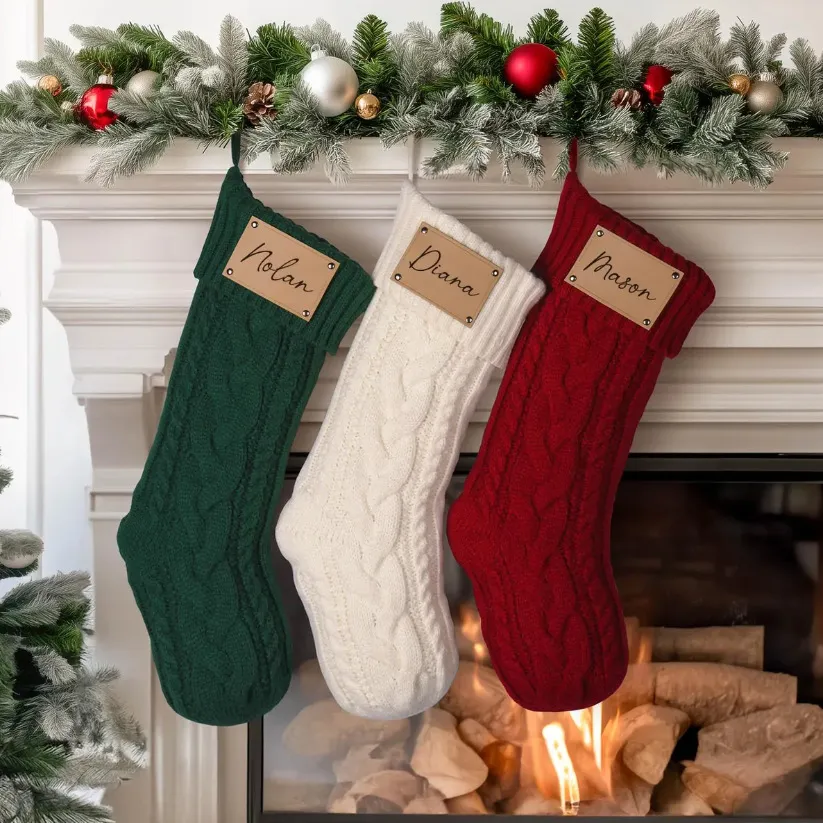
Christmas products are different from normal custom products because the selling window is fixed. A custom tote bag, tumbler, or patch can still be useful if it arrives two weeks late. A Christmas stocking, ornament, advent item, holiday gift box, or seasonal display loses most of its value after the shopping season. This makes schedule control more important than chasing the lowest unit price.
The second difference is that many buyers order at the same time. Retailers, e-commerce sellers, gift companies, and corporate buyers all try to ship holiday merchandise before the fourth quarter. Factories receive similar rush requests in August, September, and October. Freight forwarders also face heavier demand. Even when a factory can finish production, the shipment may wait for container space, flight capacity, customs processing, or inland delivery.
The third difference is that Christmas products often have more packaging than ordinary promotional items. A stocking may need a hang tag, header card, hook, barcode label, or gift box. Ornaments may need individual protection. Retail sets may need inner trays, printed boxes, warning labels, SKU stickers, and display cartons. These packaging components have their own production schedules and can delay the order if they are added late.
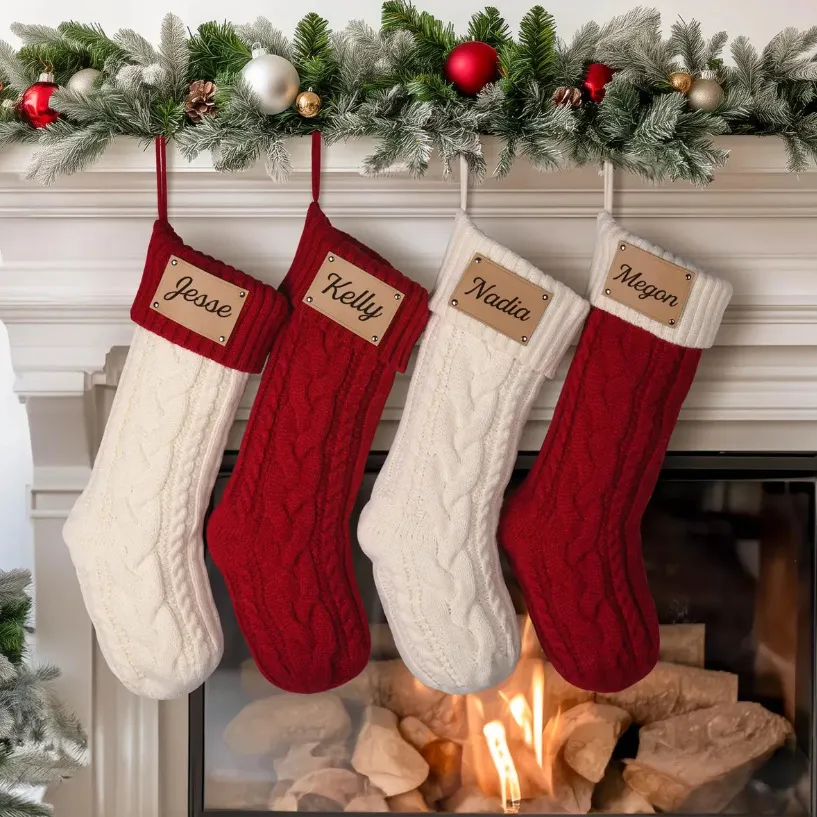
For these reasons, buyers should plan Christmas orders as a calendar project, not only as a product quote. The best RFQ states the target arrival date, selling channel, packaging requirement, and freight preference from the beginning. The supplier can then tell the buyer whether sea freight is still realistic or whether air freight must be considered.
The safest planning method is to work backward from the shelf-ready date. For most US and European retail programs, goods should arrive before November or early November. E-commerce sellers may accept later arrival for small fast-moving campaigns, but they still need time for receiving, listing, photography, warehouse intake, and customer delivery.
| Month | Buyer action | Risk if delayed |
|---|---|---|
| May | Confirm product concept, budget, and target channels | Product scope stays vague and RFQ quality drops |
| June | Request quotes, compare materials, confirm artwork direction | Sampling starts late |
| July | Approve samples and lock the purchase order | Bulk production loses factory capacity |
| August | Bulk production and packaging production | Peak orders begin to crowd the factory schedule |
| September | Final inspection and sea shipment | Sea freight timing becomes tight |
| October | Customs, inland delivery, warehouse receiving | Port and carrier congestion can break the deadline |
| November | Sales window begins | Late goods have less time to sell |
| December | Reorders only by air or local stock | New custom production is usually too late |
This calendar is conservative, but seasonal orders need conservative planning. If the buyer sells through retail stores, marketplace warehouses, or distributors, the goods may need to arrive earlier than the public selling date. Retailers often require receiving windows, routing guides, barcode labels, carton labels, and appointment scheduling. These requirements should be checked before the purchase order is placed.
Not every holiday product has the same production cycle. A simple printed stocking and a custom molded ornament do not share the same risk profile. Buyers should separate products by manufacturing complexity before setting one deadline for the whole assortment.
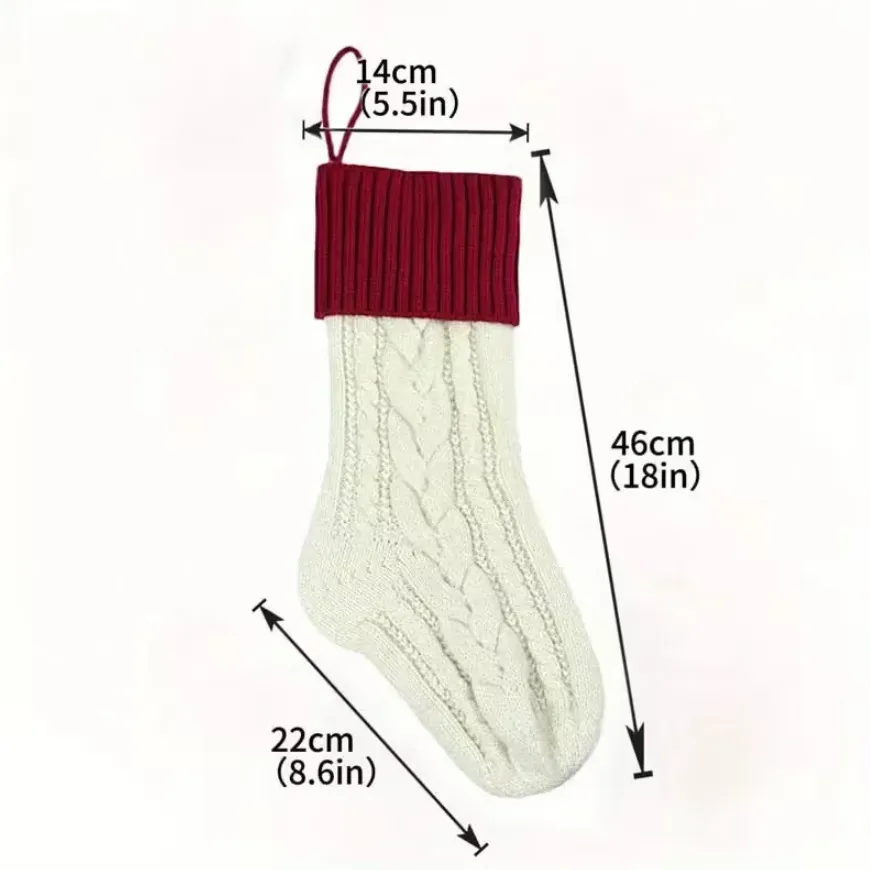
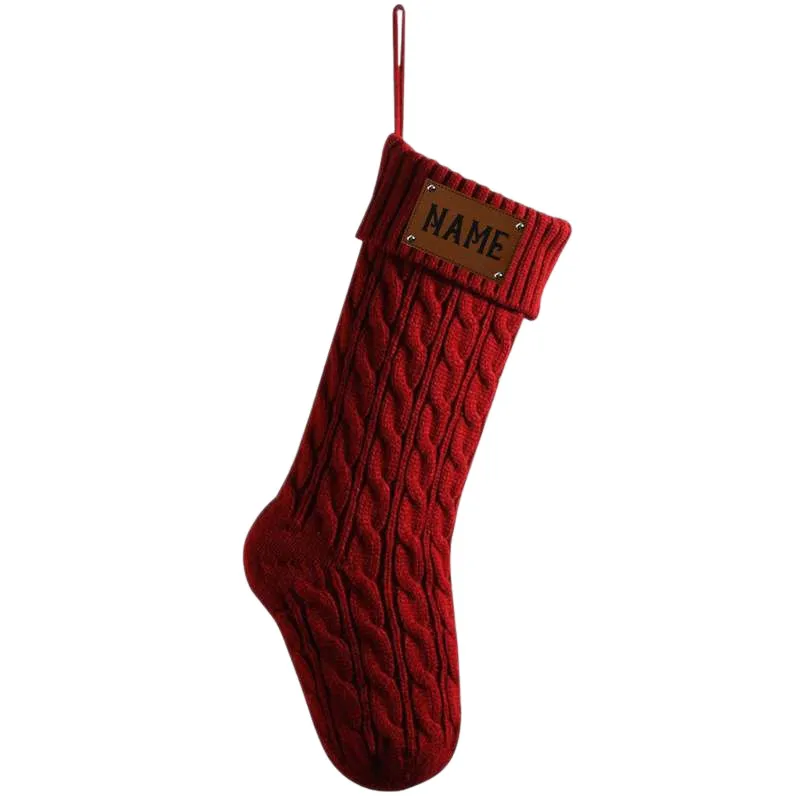
Custom knitted Christmas stockings can require yarn selection, knitting or sewing, embroidery, applique, lining, hanging loop attachment, and packing. If the stocking uses a custom pattern, name personalization, embroidery, or special trim, sampling matters. Color matching is important because holiday red, green, white, gold, and silver shades are very visible in product photos.
Christmas ornaments vary widely. A flat acrylic ornament, wooden ornament, metal ornament, glass ornament, resin ornament, and plush ornament each has a different production process. Fragile ornaments need more packaging development than textile products. Painted resin or glass items need inspection for paint quality, surface marks, attachment points, and breakage protection.
Holiday gift sets add another layer. A gift set may combine mugs, stockings, ornaments, keychains, packaging, printed inserts, tissue paper, and outer cartons. The longest component controls the schedule. If one accessory or box insert is delayed, the whole set cannot be packed. Gift sets should be quoted with a clear bill of materials and packing diagram.
Custom packaging can become the real bottleneck. Printed boxes, header cards, hang tags, barcode labels, and inserts require artwork approval and printing time. If the buyer approves the product sample but delays packaging artwork, bulk goods may sit finished while packaging is still in production.
Each component should be written into the schedule. A supplier may say production takes 30 days, but that does not include artwork correction, sample shipping, inspection, freight booking, customs clearance, or domestic delivery after arrival. Buyers should ask for a full schedule from order confirmation to warehouse arrival.
The most common hidden delay is approval time. A factory can send a digital proof quickly, but the buyer may need several days to collect feedback from design, marketing, retail, compliance, or a client. If the sample needs revision, the calendar moves again. For seasonal products, internal approval deadlines are as important as factory deadlines.
Another hidden delay is payment and documentation. Production may not start until deposit payment is confirmed. Shipment may not move smoothly until commercial invoice, packing list, carton marks, and shipping instructions are complete. For retail or marketplace shipments, label requirements should be confirmed before packing begins.
Peak season risk is cumulative. One small delay may be manageable. Several small delays can turn a safe sea shipment into an expensive air shipment. For example, a buyer loses five days on artwork, seven days on sample revision, four days on packaging proof, and one week on factory capacity. That order is now nearly a month behind without any single dramatic failure.
This is why buyers should maintain a decision log. Record when artwork was approved, when the sample was approved, when packaging was approved, when production started, when inspection is booked, and when freight space is reserved. A clear schedule makes it easier to see which task is blocking the deadline.
The strongest protection is a cutoff date. Decide the last date when the sample must be approved for sea freight. If that date is missed, the buyer should immediately switch to a revised plan instead of hoping the original schedule will still work. A clear cutoff prevents late decisions.
Another useful approach is to split the order. The main volume can ship by sea if approved early. A smaller quantity can be reserved for air freight if the buyer expects demand uncertainty or late retail confirmation. This is more expensive than a pure sea plan, but cheaper than sending the entire order by air after a late approval.
For large programs, buyers can also separate simple and complex products. Standard stockings, printed gift bags, and simple ornaments can move first. Custom molded items, gift sets, and fragile items can be scheduled with more buffer. This prevents one difficult item from delaying the full assortment.
Finally, keep specifications stable. Late changes to color, logo, packing, carton marks, barcode labels, or assortment ratios can damage the schedule. If a change is necessary, ask the supplier to confirm the impact on production and freight before approving the change.
For stockings, inspect seam strength, hanging loop attachment, embroidery or applique placement, lining, cuff shape, and fabric color. If the stocking is intended to hold small gifts, the loop and seams should be tested with light load. If the stocking includes personalized names, spelling and order matching must be controlled carefully.
For ornaments, inspect surface finish, paint, glitter shedding, hook or string attachment, shape consistency, and breakage protection. Fragile ornaments should be packed in a way that prevents movement inside the inner package. A beautiful ornament can still fail if the hook detaches or the paint rubs during transit.
For gift sets, inspect every component and the final pack-out. The contents should match the set list, the insert should hold items securely, and the outer box should close cleanly. If the set includes food-contact drinkware or children's items, compliance checks may be more important than for decorative goods alone.
Holiday products often sell because of presentation. Packaging is not only protection; it is part of the product. A stocking in a plain poly bag may work for bulk corporate gifting, while a retail stocking may need a header card, barcode, hanger, product photo, or branded insert. Ornaments may need a gift box, foam insert, window box, or individual wrap.
The buyer should define whether the goods are bulk-packed, e-commerce-ready, gift-ready, or retail-shelf-ready. These are different packing standards. Bulk packing focuses on low cost and efficient cartons. E-commerce packing focuses on item protection and SKU labels. Retail packing focuses on presentation, barcode scanning, and shelf handling. Gift-ready packing focuses on the customer's unboxing experience.
Carton marking should also be planned early. Seasonal products often include many SKUs: red stocking, green stocking, embroidered stocking, plush ornament, resin ornament, three-piece set, and so on. If cartons are not labeled clearly, warehouse receiving becomes slow and mistakes become likely. Each carton should identify item number, design, color, quantity, gross weight, carton size, and destination information if needed.
If the goods are going to a retailer, marketplace warehouse, or 3PL, ask for routing and label rules before production. Late label corrections can delay packing and shipment even when the goods themselves are finished.
Sea freight is the normal route for holiday volume but the slowest and the most affected by peak-season congestion. Air freight is reliable for time-critical fill orders at a higher cost per unit. Holiday freight rates typically rise from September; locking the plan early avoids the worst of it. Confirm FOB or CIF terms in the RFQ. See how to order for delivery options.
Sea freight is best when the order is approved early, cartons are not extremely urgent, and the buyer can accept port and inland delivery time. It is usually the only practical option for bulky, low-unit-cost seasonal products at volume. However, sea freight needs buffer. A schedule that works perfectly on paper can still be affected by vessel changes, port congestion, customs exams, or truck appointments.
Air freight is best for late approvals, small replenishment runs, urgent corporate gifts, or high-margin products. It reduces transit time but can change the economics of the order. Before approving air freight, compare the landed cost per unit with the expected margin and sales window. A product that arrives on time but becomes unprofitable is still a planning problem.
Express courier is useful for samples and very small urgent shipments. It should not be assumed for large seasonal orders unless the cartons are small and the budget allows it. Express also requires accurate documents, because customs delays can still happen.
For a mixed plan, ship the main quantity by sea and keep a small emergency quantity for air. This works well when the buyer needs product photos, launch inventory, or backup stock before the sea shipment arrives.
If the buyer misses the ideal July or August window, the order may still be possible, but the strategy must change. The first step is to simplify the product. Use stock materials, existing shapes, standard packaging, and fewer SKUs. Avoid custom molds, complex gift boxes, and new packaging structures if the deadline is close.
The second step is to reduce approval cycles. The buyer should send complete artwork, Pantone references, size requirements, packing rules, and delivery address in one RFQ. Internal approval should be fast. If the sample arrives and only minor issues exist, decide quickly whether the issue is acceptable or whether a revision is worth the delay.
The third step is to choose the right freight plan. A late order that must arrive before a fixed date may need air freight from the start. Trying to force sea freight onto an impossible calendar usually creates stress and then still ends in air freight.
The fourth step is to split the assortment. Keep the most important SKU and cancel or postpone slow, complex, or low-margin items. It is better to deliver a focused holiday assortment on time than a full assortment after the season.
When sending an RFQ for Christmas goods, include a schedule request. A useful template is:
| Planning item | Buyer target | Supplier confirmation |
|---|---|---|
| Artwork/spec approval date | Date | Confirm feasibility |
| Sample completion date | Date | Confirm sample method |
| Final sample approval cutoff | Date | Confirm latest safe date |
| Bulk production start | Date | Confirm capacity |
| Bulk production finish | Date | Confirm inspection date |
| Pre-shipment inspection | Date | Confirm booking |
| Sea or air shipment date | Date | Confirm freight plan |
| Destination arrival date | Date | Confirm risk level |
| Warehouse/shelf-ready date | Date | Confirm buffer |
This template forces the schedule into concrete dates. If the supplier cannot confirm a date, that part of the plan is a risk. The buyer can then decide whether to simplify the product, change freight mode, or move the selling plan.
When contacting us, include:
Best for buyers reviewing lead time planning guide, related SKU images, RFQ details, MOQ, sampling, packaging, QC, and shipment planning from China.
For sea freight to the US or Europe, order by July or August for November arrival. The lead time stacks artwork, sampling, production, and 3-5 weeks of transit, and peak-season congestion adds risk.
Production time depends on the product type and quantity. The reliable way to plan is to work backward from the target arrival date and confirm the schedule in the RFQ.
Freight congestion and factory capacity in the peak season, plus Chinese holiday windows in early October. Ordering early is the main protection against all three.
Send your artwork, target quantity, packing needs, destination country, and deadline to quote custom christmas stocking lead time with clear factory assumptions.
Data verified as of 2026-08-04. MOQ, lead time, packaging, and compliance scope should be confirmed against the actual order before purchase order approval.
Decision closure
Use the next step that matches your buying stage.
Go to factory-direct custom products without marketplace sourcing to build a normalized RFQ before comparing supplier quotes.
Go to direct factory communication for custom product orders to turn supplier messages into a controlled production record.
Go to the custom product brief form to send artwork, quantity, packaging, and destination details for review.