If you are still choosing the right product category
Go to product category hubs to compare product families before choosing a sourcing route.
A custom door sign RFQ is complete when it answers seven questions: material, size, mounting or hanging method, text and language, print or engraving method, quantity, and destination. Door signs look simple, but the spec differences are large - a PU leather hotel door hanger, an acrylic double-sided meeting sign, and a PVC privacy sign are three different products with three different production paths. Send the text exactly as it should appear (including any second language), the physical size, and the mounting requirement in the first message, and the quote will come back right the first time.
Door signs look simple because they are small, flat, and easy to photograph. In production, they are surprisingly specification-sensitive. A small change in hole size, material thickness, edge finish, text layout, or mounting method can turn a usable sign into inventory that does not fit the door, does not match the property design, or cannot be installed by the contractor.
The biggest issue is that "door sign" means different things to different buyers. A hotel may mean a soft PU leather do-not-disturb hanger. An office may mean an acrylic meeting-room sign mounted beside the door. A spa may mean a handle hanger with waterproof printing. A retailer may mean an open/closed sign that hangs from a hook. The production route changes with each use case.
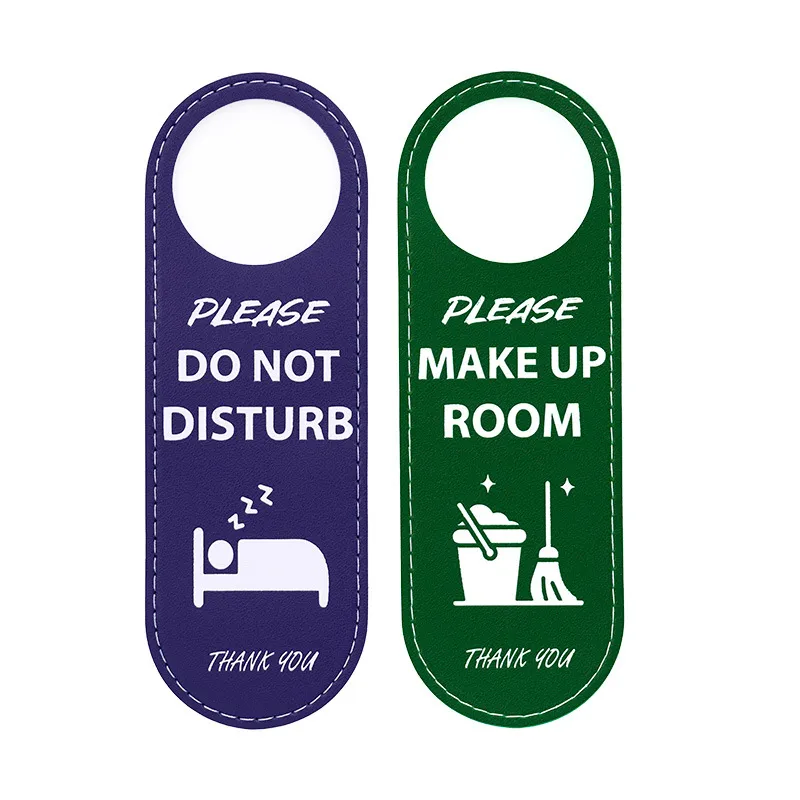
The second issue is language and text accuracy. Door signs often carry short messages, but short text gives no room for error. One typo, wrong accent mark, wrong capitalization, or missing second language can require a full reprint. For hotel groups and international properties, multilingual layout should be treated as a technical requirement, not a design afterthought.
The third issue is installation. Door-hanger openings, screw holes, adhesive backing, magnetic backing, suction cups, hooks, and wall hardware all need to match the real door or wall surface. A sign can look perfect in the sample room but fail on site if the mounting method is not confirmed.
The best RFQ starts with use case because material, finish, and mounting are driven by where the sign will be used.
| Use case | Common product | Main RFQ focus |
|---|---|---|
| Hotel room privacy | PU leather or PVC door hanger | Door handle opening, double-sided text, quiet material |
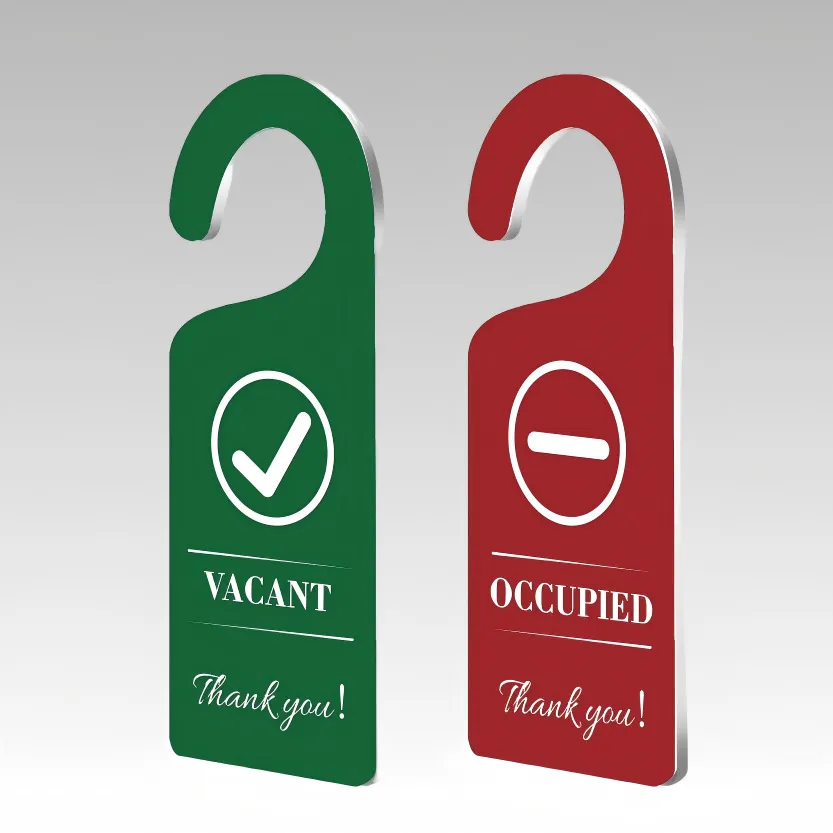
| Housekeeping status | Door hanger with two messages | Language split, side A/side B layout, color coding |
| Meeting room | Acrylic or metal wall sign | Mounting method, visibility, room name change policy |
| Restroom or facility sign | Acrylic, metal, PVC, or wood plate | Compliance, icons, mounting height, durability |
| Spa or clinic room | Handle hanger or wall sign | Soft design, privacy wording, cleanable surface |
| Retail open/closed | Hanging acrylic, PVC, or wood sign | Double-sided message, chain/hook, storefront visibility |
| Event or temporary sign | PVC or paperboard sign | Low cost, short lead time, easy hanging |
For a multi-property hotel, the RFQ may need several sign types in one program: room do-not-disturb hangers, housekeeping cards, door numbers, restroom signs, pool signs, and staff-only signs. Quote each type separately even if the supplier ships them together. This keeps pricing and production clear.
Door signs are not one product. Specify which:
If the program includes more than one product type, separate them by line item. A PU leather hanger, acrylic wall plate, and metal restroom sign should not be quoted as one vague "door sign." Each item has different material, tooling, print, packing, and installation requirements.
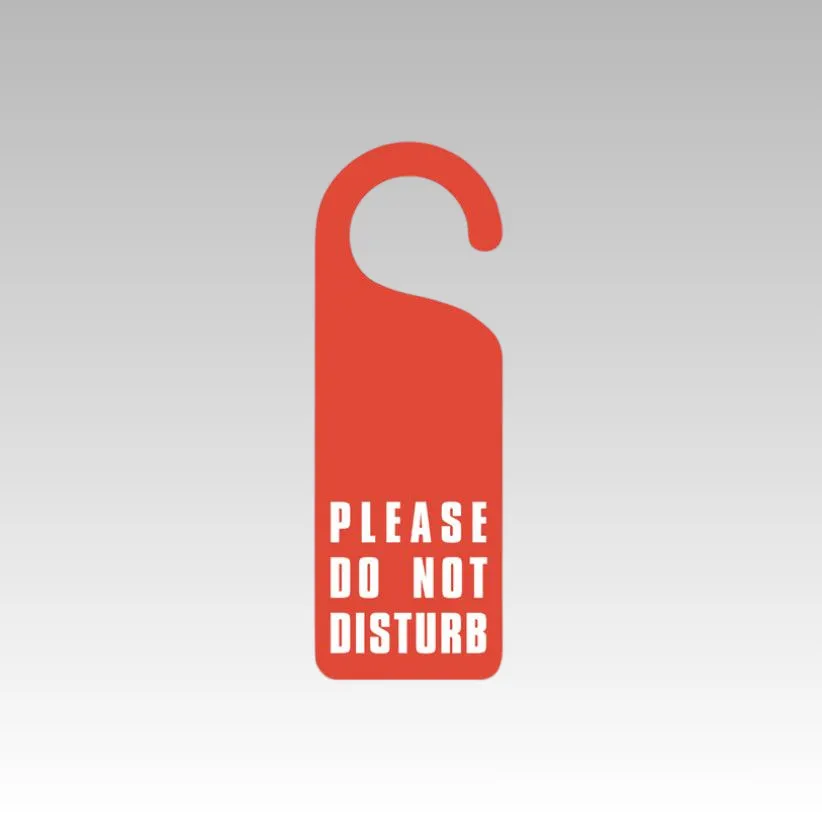
Material should match the environment. PU leather feels quiet and premium for hotel rooms because it does not clatter against the door handle. Acrylic looks clean and modern for offices, clinics, coworking spaces, and meeting rooms. PVC is practical for high-volume printed signs because it is durable and cost-effective. Metal and wood are stronger for permanent wall-mounted signs, but they cost more and may require more careful installation.
For wet or semi-wet areas such as bathrooms, pools, spas, and outdoor corridors, ask about water resistance, cleaning resistance, UV exposure, and adhesive performance. A material that works in a dry hotel room may not perform well near moisture or sunlight.
State the finished size in mm or inches. Door hangers are typically around 200x70 mm; wall plates vary widely. The size drives material cost, print setup, and packing volume.
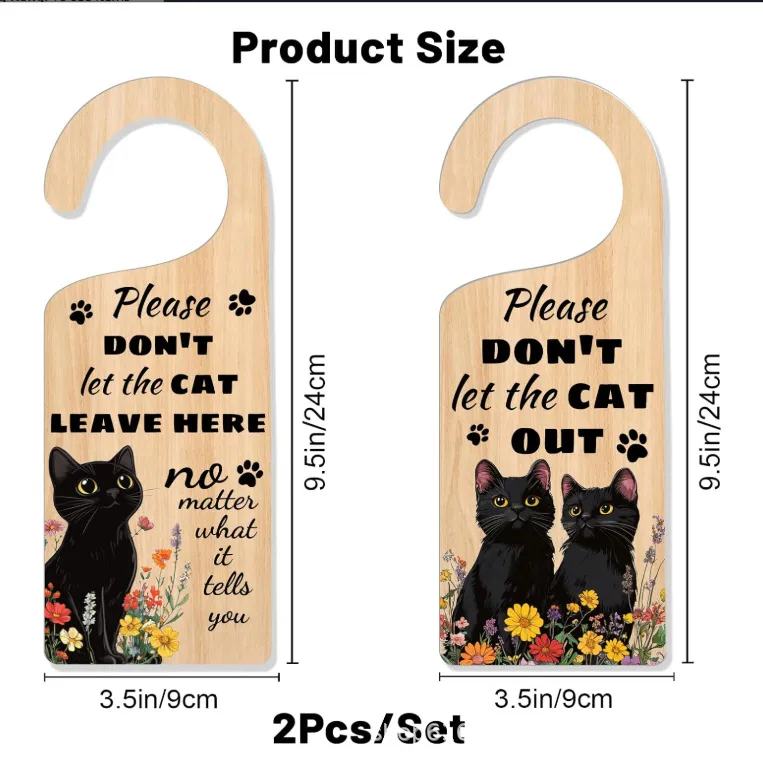
Size also affects readability. A sign that looks balanced on a computer screen may be too small in a hotel corridor or too large on a narrow office door. If the buyer has a real door sample, handle size, or wall position, measure it before quoting. For door hangers, confirm overall height, width, neck opening diameter, and slot width. For wall signs, confirm width, height, thickness, and mounting hole positions.
Use one unit system in the RFQ. Mixing inches and millimeters can create errors. If the buyer sends a drawing, the drawing should include dimensions and scale. If the sign must fit existing hardware, send photos and measurements of that hardware.
Send the exact text, including punctuation and any second language (hotels commonly need bilingual or trilingual signs). Spell-check once - re-printing for a typo is the most avoidable cost in this product.
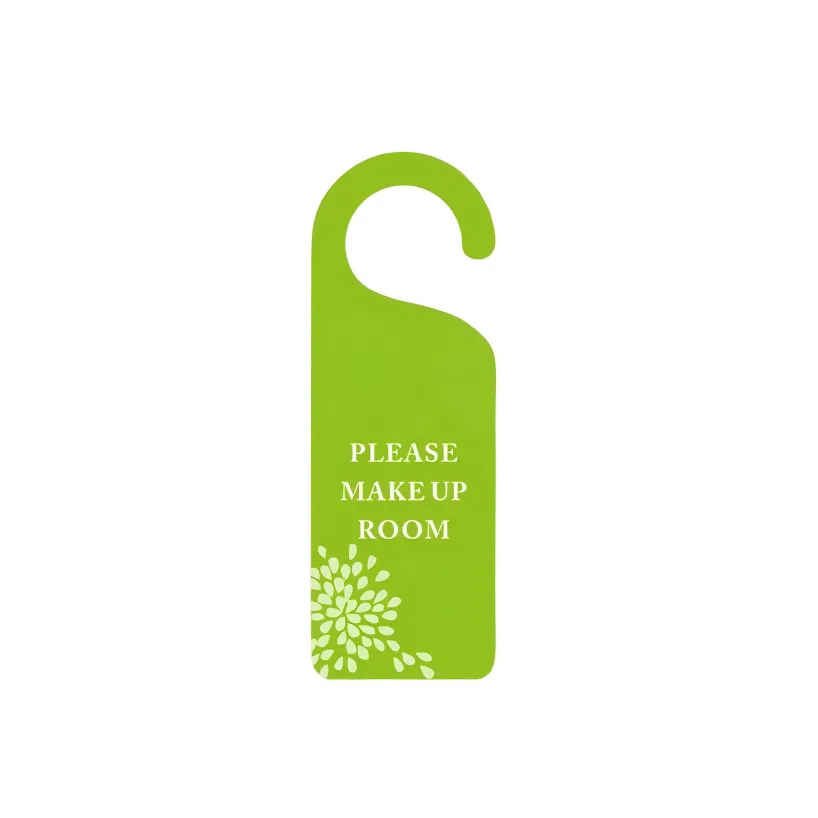
For multilingual signs, send approved text in final form. Do not ask the supplier to translate unless translation is part of the service and will be reviewed by the buyer. Hotel signs often include short but sensitive phrases such as "Do Not Disturb," "Please Make Up Room," "Privacy Please," "Meeting in Progress," or "Cleaning in Progress." The tone should match the brand.
If the sign has two sides, label side A and side B clearly. Do not rely on file order or email descriptions. A common hotel format is one side for privacy and one side for housekeeping. The buyer should confirm text, icon, color, and orientation for both sides.
Print or engraving choice changes both appearance and durability. UV printing is flexible for full-color logos, icons, and gradients. Laser engraving is cleaner and more permanent on acrylic, wood, and some metals. Embossing or debossing can create a premium leather effect but may not show small details well. Screen print is efficient for simple flat-color designs at volume.
The buyer should decide whether the sign needs a premium tactile feel or a colorful graphic look. A hotel luxury door hanger may use debossed leather with subtle foil or print. A coworking meeting sign may use printed acrylic. A retail open/closed sign may use bold double-sided printing for visibility.
State total quantity and any split by design, language, or color (e.g., 500 "Do Not Disturb" + 500 "Please Make Up Room").
Quantity split matters because each version may need separate printing, inspection, packing, and labeling. A 1,000-piece order with one design is simpler than 1,000 pieces split across five languages and four colors. If the buyer needs property names, room types, department labels, or personalized text, provide a spreadsheet and confirm whether each version has a minimum.
Include destination country, port, and target arrival date. Hotel procurement often runs on a renovation schedule; the deadline is part of the spec.
Door signs often arrive near the end of a renovation, office opening, or retail rollout. This creates schedule pressure because the signs must be ready before the property opens or the rooms are handed over. The RFQ should include not only the desired ship date but the required arrival date on site.
| Question | Why it matters |
|---|---|
| Double-sided or single-sided? | Double-sided signs require additional printing or engraving, which changes cost. |
| Hole position and size? | Door-hanger openings must match the handle or mounting point. |
| Waterproof required? | Bathroom and outdoor signs need different materials and finishes. |
| Multiple language versions? | Multilingual signs add layout and proofreading work. |
| Packing method? | Individual protection versus bulk packing affects freight cost and damage risk. |
The custom PU leather hotel door hanger and custom acrylic door hanger sign pages show current specifications for two common product paths.
| Material | Strengths | Watch points |
|---|---|---|
| PU leather | Soft, quiet, premium hotel feel | Edge finish, emboss clarity, color consistency |
| Acrylic | Modern, rigid, clean edges | Scratches, edge polishing, mounting holes |
| PVC | Durable, low-cost, easy to print | Thickness, flexibility, color fade |
| Wood | Warm, boutique look | Grain variation, moisture, engraving contrast |
| Metal | Durable, premium, permanent | Sharp edges, weight, mounting hardware |
| Paperboard | Low-cost temporary use | Moisture, bending, short life |
For hotels, PU leather and PVC are common for portable hangers, while acrylic, wood, and metal are more common for fixed signs. For offices, acrylic and metal are often preferred because they look modern and professional. For temporary campaigns, PVC or paperboard may be enough.
The material decision should also consider noise and surface contact. A hard acrylic sign hanging on a hotel door handle may make noise when the door moves. PU leather is quieter. A metal sign may feel premium but can scratch a painted door if not designed correctly. These details are small but important in hospitality settings.
Mounting is one of the most important parts of a custom door sign RFQ. If the sign does not attach correctly, the design and print quality do not matter.
For handle hangers, provide the handle type or a photo of the door handle. Confirm the opening diameter, slot width, neck shape, and whether the sign should hang straight. Hotel doors, lever handles, round knobs, and modern card-access doors may require different cutouts. If the sign is for a hanger over a handle, test it on the real handle before bulk production.
For wall-mounted signs, confirm adhesive, screw holes, standoffs, magnetic backing, or hanging chain. Adhesive is easy but depends on wall surface, humidity, cleaning chemicals, and long-term hold. Screws and standoffs look more permanent but require installation labor and accurate hole placement. Magnetic signs work only on suitable metal surfaces.
For signs that slide, flip, or rotate, confirm the moving mechanism. A meeting room occupancy sign or privacy slider must move smoothly without feeling loose. The sample should be tested repeatedly because movement failures appear through use, not in a single front photo.
If hardware is included, list it in the RFQ. Screws, anchors, chains, hooks, suction cups, adhesive strips, and installation templates are separate components. They also affect packing and carton labels.
Door signs are text-heavy, so artwork control matters. Send vector files when possible, and outline fonts if the font is not standard. If the supplier opens the file without the correct font, the layout can shift. For brand consistency, include logo files, color references, font names, and spacing instructions.
For small signs, keep text readable. A bilingual hotel hanger can become crowded if both languages are long. Icons can help reduce text, but icons should be culturally clear and easy to understand. If a sign must be read from a distance, prioritize contrast and large type over decorative detail.
For double-sided signs, confirm orientation. A design can accidentally be printed upside down on one side if the artwork file does not clearly show how the sign hangs. Use labels such as "front side when hanging on door" and "back side facing hallway" if needed.
If the buyer has multiple room names or sign messages, a spreadsheet helps. Include item number, text, language, quantity, color, size, and any mounting differences. This reduces the risk of missing one version during production.
MOQ depends on material, print method, and size - confirm the MOQ for the exact configuration in the RFQ. Sampling is recommended for signs with printing or engraving: approve the physical sign checking text, color, size, and mounting before bulk production. Lead time includes artwork confirmation, sampling, production, and freight; renovation and event deadlines belong in the RFQ.
MOQ is affected by version count. A single design in one color may have a flexible minimum. Multiple languages, room names, color sets, or double-sided layouts can raise the practical minimum because each version needs separate setup and checking. For small version splits, ask whether the supplier can combine production while maintaining separate packing.
Sampling is important because signs are installation products. The physical sample should be tested on the real door handle, wall surface, or mounting position if possible. For acrylic or metal signs, check edge smoothness, hole position, thickness, and hardware fit. For PU leather signs, check softness, edge finish, embossing, print clarity, and whether the hanger stays flat.
Lead time should include packaging artwork if the signs are retail packed or property packed. A hotel rollout may need each carton marked by floor, room type, or location. That sorting requirement should be agreed before production starts.
Text inspection should be stricter than ordinary product inspection. A small spelling error is a major defect because the sign is useless for the intended property. For multilingual signs, have the buyer or local team approve the language before bulk production. The factory should not be responsible for final translation unless that service is explicitly part of the agreement.
Mounting inspection should be physical. Measure hole positions and test hardware fit. If the sign hangs on a handle, place the sample on the handle or a matching template. If adhesive is used, check whether the backing is applied evenly and whether installation instructions are included.
For finish inspection, check edges by touch. Acrylic and metal signs should not have sharp burrs. PU leather should not have peeling edges or loose stitching. PVC should not have rough cutting marks. Printed signs should not show banding, scratches, ink smears, or color mismatch.
Door signs are often delivered to hotels, offices, clinics, stores, or construction sites where installation teams need clear organization. Packing should support installation, not only shipping.
For a single design, bulk packing with protective layers may be enough. For multiple floors, rooms, departments, languages, or properties, cartons should be labeled clearly. If the buyer needs signs sorted by location, provide the sorting list before production. The supplier can then pack by floor, room range, store, or property.
Individual protection matters for acrylic, metal, wood, and printed signs because scratches are visible. Acrylic may need protective film. Metal may need separators. Leather hangers may need flat packing to prevent bending. Retail-style signs may need individual bags or printed cards.
If the signs are going to a renovation site, ask who receives the goods and whether cartons need to be small enough for site handling. A perfect shipment can still create problems if cartons are not labeled for installation or if hardware is packed separately without clear instructions.
A clear RFQ might read:
Product: PU leather hotel door hanger. Size 220 x 80 mm, handle opening 45 mm diameter with slot. Double-sided print: side A "Do Not Disturb" in English and Spanish, side B "Please Make Up Room" in English and Spanish. Material: black PU leather, white print, clean stitched edge. Quantity: 1,000 pieces, packed 100 pieces per carton, each sign flat-packed with protective paper. Destination: Los Angeles, required arrival date October 15. Please quote MOQ, sample cost, sample time, bulk production time, carton size, and shipping options.
This RFQ gives the supplier enough information to quote the actual product. It also reduces back-and-forth because the material, size, text, side count, language, packing, and deadline are already clear.
For an acrylic office sign, the RFQ would be different:
Product: acrylic meeting room door sign, wall-mounted with adhesive backing. Size 180 x 60 x 3 mm, matte black acrylic with white UV print. Single-sided. Text list provided in spreadsheet, 50 room names total, quantity one per room plus five spare signs. Individual protective film required. Destination: New York office, delivery before renovation handover.
These examples show why "please quote door signs" is not enough. A good RFQ describes how the sign will be used.
Before approving the quote, ask:
These questions protect against the most common quote gaps. They also help compare suppliers fairly because each supplier is quoting the same configuration.
Best for buyers reviewing rfq checklist, related SKU images, RFQ details, MOQ, sampling, packaging, QC, and shipment planning from China.
A door hanger hangs over the handle and is portable; a wall-mounted sign is fixed with adhesive or screws. They have different materials, mounting hardware, and production paths.
Yes, double-sided printing or engraving is common for hanging signs, but it changes the cost and setup. Confirm the requirement in the RFQ.
PU leather is the hotel-standard look, soft and quiet; PVC is durable and cost-effective at volume; acrylic suits modern design. The choice depends on the property's brand and volume.
Send your artwork, target quantity, packing needs, destination country, and deadline to quote custom door sign RFQ with clear factory assumptions.
Data verified as of 2026-08-04. MOQ, lead time, packaging, and compliance scope should be confirmed against the actual order before purchase order approval.
Decision closure
Use the next step that matches your buying stage.
Go to product category hubs to compare product families before choosing a sourcing route.
Go to custom products for startups under 500 units to check low-MOQ order logic before asking for bulk pricing.
Go to the custom product brief form to send artwork, quantity, packaging, and destination details for review.